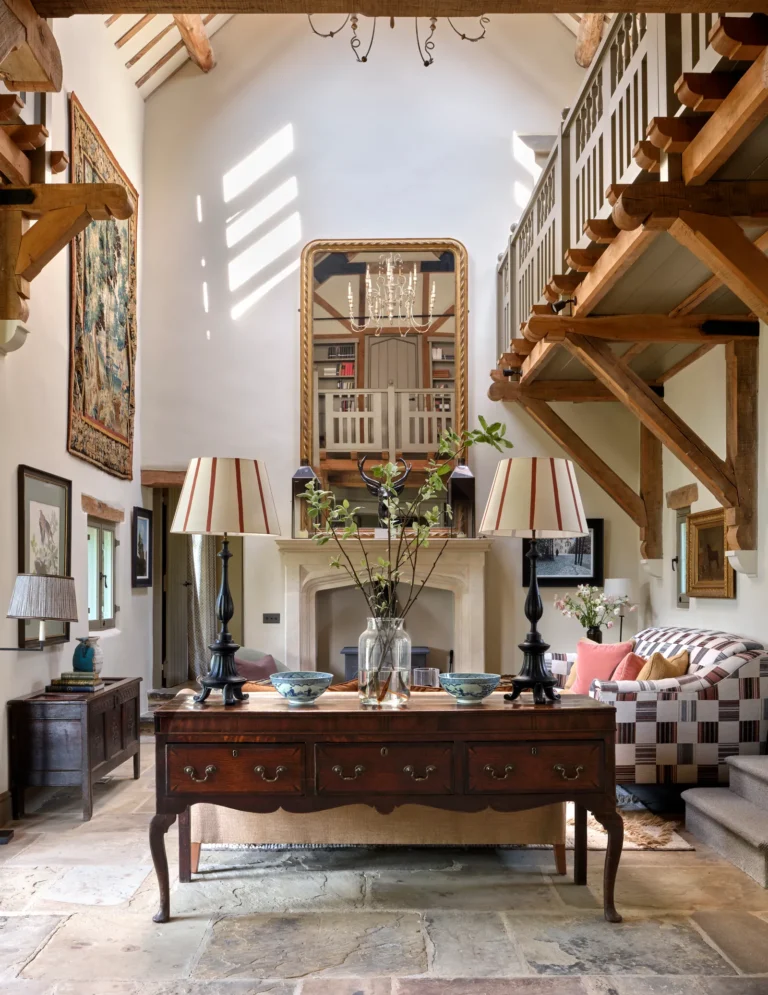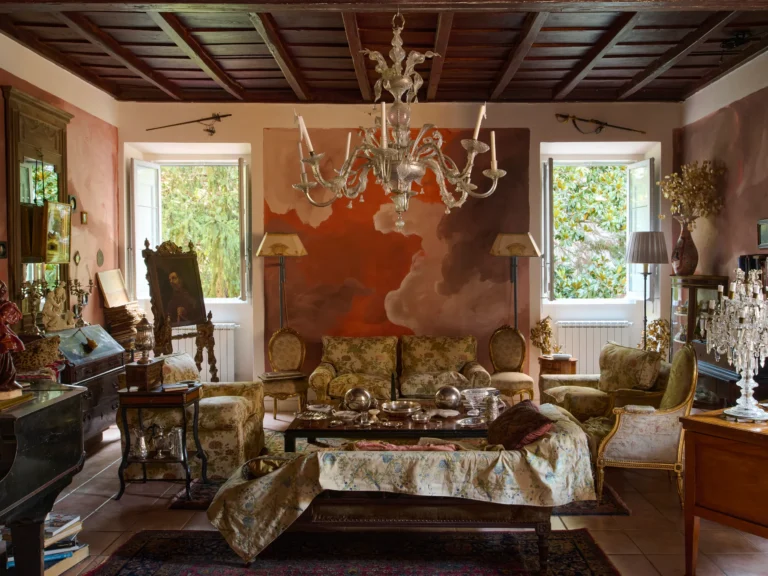
Step into a world where great hall ceilings soar, stone walls hold centuries of secrets, and candlelight dances off wrought iron chandeliers. A medieval house interior isn’t about living in the past — it’s about capturing its romance, its craftsmanship, and its sense of enduring strength. You’ll love how the combination of rough stone, warm wood, flickering candles, and rich textiles can transform a modern home into a cozy fortress, like a castle keep tucked into a quiet hillside.
From great rooms with massive fireplaces and vaulted ceilings to kitchens with checkered floors and wooden beams, from Tudor breakfast nooks to Gothic-inspired dining halls, these medieval house interior ideas will help you channel the spirit of the Middle Ages without sacrificing comfort. Imagine gathering around a crackling fire in a room lit by iron chandeliers, dining at a long wooden table, or soaking in a bathroom lit by candles. Your home can be that magical. Let’s journey back in time — beautifully.
1. Great Hall Warmth – A Fireplace as the Heart of the Home
Center your living room around a grand stone fireplace — the heart of any medieval house interior. The massive hearth anchors the room, its crackling fire providing both warmth and drama. You’ll love how the stone surround feels like it’s been there for centuries, the flames dancing like the fires of a great hall, gathering loved ones around its glow.
For an authentic medieval house interior, choose a fireplace with a wide, deep hearth where you can sit. Add a wrought iron fire screen and a mantle of rough-hewn wood. Arrange heavy wooden furniture around it — the fire should be the focal point.
2. Castle Kitchen – Wooden Cabinets & Checkered Floors
Design a kitchen with warm wooden cabinets and a black-and-white checkered floor for old-fashioned charm. The wood adds warmth, the checkered floor adds pattern. In this medieval house interior, the kitchen feels like a castle’s scullery, updated for modern cooking. You’ll appreciate how the checkered floor hides crumbs, the wood cabinets showing off their grain like aged oak.
Choose cabinets in a dark, rich wood — walnut, cherry, or stained oak. For medieval house interior, add wrought iron hardware and a farmhouse sink. The checkered floor can be stone or ceramic tile. A large wooden table in the center completes the look.
3. Castle Entry – A Grand First Impression
Create a grand entryway with stone walls, a wooden bench, and a wrought iron chandelier. The space should feel like a castle vestibule — welcoming but imposing. In this medieval house interior, the entry sets the tone for the whole home, the stone whispering of ancient keeps, the iron gleaming like armor.
Use stone veneer or real stone on the walls. For medieval house interior, add a long wooden bench with cushions, a large mirror in an ornate frame, and a coat rack made of antlers or wrought iron. The floor can be stone or dark wood.
4. Wrought Iron Chandelier – A Ceiling of Candlelight
Hang a massive wrought iron chandelier from a high ceiling in your living room. The dark metal and candle-like bulbs create a dramatic, old-world focal point. In a medieval house interior, the chandelier feels like it belongs in a great hall, its arms reaching out like branches, its light casting warm shadows on stone walls.
Choose a chandelier with scrolling arms and candle-shaped bulbs. For medieval house interior, the chandelier should be proportional to the room — large for a great room, smaller for an entryway. Use dimmable bulbs to control the ambiance.
5. Stone & Wood Kitchen – A Timeless Pairing
Combine a stone wall or floor with wooden cabinets and a white farmhouse sink for a rustic, medieval-inspired kitchen. The stone grounds the space, the wood warms it. In this medieval house interior, the kitchen feels like it’s been added to a castle over time, the materials aging gracefully together.
Use real or faux stone on one wall. For medieval house interior, choose cabinets in a dark stain, and add open shelves for pottery and wooden bowls. A white apron-front sink and brass fixtures complete the look.
6. Tapestry Walls – Fabric That Tells a Story
Hang large tapestries on your stone walls to add color, texture, and a sense of history. The woven scenes — hunt scenes, battles, gardens — transport you to another era. In a medieval house interior, tapestries also provide insulation and soften the stone’s hardness, like a warm blanket on cold castle walls.
Look for tapestries with medieval themes or simply choose rich, dark fabrics (velvet, brocade) in jewel tones. For medieval house interior, hang them from wrought iron rods. Even one large tapestry can transform a room.
7. Dining Hall – Long Table Under a Chandelier
Place a long, heavy wooden dining table under a wrought iron chandelier for a true great hall feel. The table should be substantial enough to hold a feast. In this medieval house interior, the dining room becomes a gathering place, the chandelier casting dramatic light on the faces of guests, the table’s surface worn smooth by imaginary elbows.
Choose a trestle table or a refectory table. For medieval house interior, pair it with wooden benches or carved chairs. Add candlesticks, a runner, and pottery. The floor below can be stone or dark wood.
8. Castle Bath – Candles & Stone
Create a spa-like medieval bathroom with stone walls, a vessel sink, and candles on the vanity and around the tub. The candles replace harsh electric light, creating a soft, flickering glow. In a medieval house interior, the bathroom feels like a monk’s bathhouse or a castle’s private chamber, the steam rising past stone, the scent of beeswax in the air.
Use real or faux stone on the walls. For medieval house interior, choose a copper or hammered metal sink, a clawfoot tub, and wrought iron fixtures. Place candles in iron holders or on stone ledges.
9. Kitchen Island – A Central Workhorse
Place a large wooden kitchen island in the center of your medieval-inspired kitchen, with a wrought iron chandelier or pot rack hanging above. The island provides workspace and gathering space. In this medieval house interior, the island feels like a butcher block in a castle kitchen, the chandelier or rack holding pots that gleam like armor.
Choose an island with a butcher block top and storage below. For medieval house interior, hang copper pots from the rack above. The island can be on wheels or stationary. Surround it with stools or keep it clear for prep work.
10. Stone & Wood – A Kitchen Floor With History
Combine stone flooring with wood cabinets for a kitchen that feels ancient and durable. The stone is cool and practical, the wood adds warmth. In this medieval house interior, the floor could be original to a castle, worn smooth by centuries of footsteps, the wood cabinets later additions that aged gracefully.
Use natural stone tiles (slate, limestone, or flagstone) for the floor. For medieval house interior, seal the stone to prevent staining. The wood cabinets can be dark or light, but keep the hardware simple (iron or brass).
11. Gothic Arches – A Window to the Past
Incorporate Gothic arches in your doorways, windows, or alcoves. The pointed arch is the signature of medieval architecture. In a medieval house interior, an arched window or doorway instantly transports you to a cathedral or castle, the curve lifting the eye, the point reaching toward heaven.
If you can’t build real arches, use arched mirrors or create a faux arch with molding. For medieval house interior, paint the arch a contrasting color or leave it as natural wood or stone. Even one arched element adds character.
12. Tudor Nook – A Cozy Breakfast Bench
Create a Tudor-style breakfast nook with a built-in wooden bench topped with cushions and quilts. The nook is cozy and intimate, perfect for morning meals. In this medieval house interior, the nook feels like a window seat in a castle’s kitchen, the quilt adding color, the bench worn smooth by use.
Build a bench into an alcove or against a wall. For medieval house interior, use dark wood and add a small table in front. Hang a tapestry or a painting above the bench. Add lots of pillows and a warm throw.
13. Stained Glass – Color & Light
Install stained glass windows in your kitchen or dining room to add color, light, and a cathedral-like feel. The colored glass casts jewel-toned beams across the room. In a medieval house interior, stained glass is a luxury, each pane a story, the sunlight transforming into a rainbow on your stone floor.
You don’t need full windows — a stained glass panel in a cabinet door or a small window works. For medieval house interior, choose a design with medieval motifs — roses, crosses, shields, or geometric patterns. The glass can be antique or reproduction.
14. Ornate Mirror – A Grand Reflection
Hang a large, ornate mirror in a carved wooden or gilded frame in your entryway or great room. The mirror reflects light and adds a touch of Renaissance luxury. In a medieval house interior, the mirror is a later addition, but its elaborate frame feels like a treasure brought back from a crusade.
Look for mirrors with dark wood, gold leaf, or carved details. For medieval house interior, the mirror can be arched or rectangular. Place it above a console table or a fireplace to maximize its impact.
15. Stone Wall Feature – A Textured Backdrop
Cover one accent wall in your living room with stone — real or faux — to create a castle-like backdrop for your furniture. The stone adds texture, warmth, and drama. In a medieval house interior, the stone wall feels ancient, the mortar between the stones holding secrets, the rough surface catching firelight.
Use stone veneer for a lighter, easier installation. For medieval house interior, choose irregular, natural-looking stones in warm grays and browns. The stone wall can extend from floor to ceiling or stop at chair-rail height.
16. Dining by the Fire – A Hearthside Table
Place your dining table near a large fireplace so guests can eat while warmed by the flames. The arrangement is practical and romantic. In this medieval house interior, the fire would have cooked the food and heated the hall, the table close enough to catch the warmth, the feast lit by flickering light.
Position the table so diners face the fire. For medieval house interior, use a long, heavy wooden table and benches. Hang a candelabra or chandelier above the table. The fireplace should be the room’s focal point.
17. Rustic Kitchen – A Bread Oven & Wood Stove
Install a wood-burning stove or a masonry bread oven in your rustic kitchen. These old-fashioned cooking methods add authenticity and warmth. In a medieval house interior, the oven would be the heart of the kitchen, its fire roaring, the smell of bread filling the air, the stove’s black iron gleaming.
A masonry oven is a major installation, but a wood-burning stove is easier. For medieval house interior, choose a stove in black or dark cast iron. Place it near a stone wall or chimney. Use it for heat and for cooking (pizza, bread, stews).
18. Western Gothic – Dark & Romantic Kitchen
Design a Western Gothic kitchen with dark wood cabinets, black countertops, iron hardware, and a stone floor. The look is moody, romantic, and dramatic. In this medieval house interior, the kitchen feels like a castle’s scullery, the dark colors absorbing light, the iron details adding a sense of strength and permanence.
Use black soapstone or granite for countertops. For medieval house interior, choose cabinets in a dark stain, and add open shelves for pewter or pottery. Hang a wrought iron chandelier and use candlelight whenever possible.
19. Castlecore Color Palette – Deep, Rich Hues
Use a deep, rich color palette in your medieval house interior — burgundy, forest green, navy blue, and gold. These jewel tones evoke the tapestries and stained glass of a castle. You’ll love how the colors feel warm and regal, the burgundy like a king’s cloak, the green like the forest beyond the castle walls.
Paint walls in deep tones, or add color through upholstery, curtains, and rugs. For medieval house interior, use velvet, brocade, or wool fabrics. Gold accents (frames, candlesticks, trim) add richness. Keep ceilings lighter to avoid a cave-like feel.
20. Iron Details – Hardware & Accessories
Add wrought iron details throughout your home — cabinet hardware, light fixtures, curtain rods, and fire screens. The black metal is quintessentially medieval. In a medieval house interior, iron feels hand-forged, each curve and scroll evoking a blacksmith’s hammer, the metal cool to the touch but warm in firelight.
Choose iron pieces with scrollwork, nail heads, or hammered textures. For medieval house interior, use iron for chandeliers, sconces, and even furniture (iron bed frames, table bases). The repetition of iron throughout the home creates cohesion.
21. Candlelight Only – A Romantic Evening
Light your medieval room with candles only (real or flickering LED) for a truly authentic evening atmosphere. The soft, moving light flatters faces and creates deep shadows. In a medieval house interior, candles were the only light source, their glow making the stone walls seem to breathe, the tapestries to move.
Use candlesticks, candelabras, and chandeliers with candle sleeves. For medieval house interior, choose unscented candles (beeswax or tallow). Place them at different heights. If using real candles, be careful with fire safety and never leave them unattended.
22. Heraldic Accents – Shields & Coats of Arms
Decorate with heraldic elements — a shield on the wall, a family crest, or a banner with a coat of arms. These symbols add a noble, personalized touch. In a medieval house interior, a shield feels like it once belonged to a knight, the crest telling a story of loyalty and lineage.
You can buy replica shields or make your own. For medieval house interior, hang a shield above a fireplace, in an entryway, or in a great room. Add a banner or a tapestry with similar colors. The heraldic theme can be as subtle or as bold as you like.
23. Feast-Ready Table – A Medieval Banquet
Set your dining table for a medieval feast with wooden chargers, pewter plates, goblets, and candlesticks. The table becomes a stage for a grand meal. In this medieval house interior, the table is laden with food, the goblets filled with mead, the candles burning low as the feast goes on into the night.
Look for pewter or ceramic plates in rustic shapes. For medieval house interior, use linen napkins folded simply, and place a centerpiece of autumn leaves, berries, or candles. A long wooden table is essential.
24. The Keep – A Two-Story Great Room
If you have a two-story great room, embrace its verticality with a massive stone fireplace, a wrought iron chandelier, and a gallery walkway above. This is the ultimate medieval house interior — a true great hall. You’ll feel like a lord or lady of the manor, the fire roaring below, the chandelier hanging like a crown, the walkway where minstrels might have played.
Use the upper walkway as a library or sitting area. For medieval house interior, hang tapestries on the upper walls to soften the stone. The fireplace should be large enough to heat the entire space. The chandelier should be proportional to the height.
🏰 The Castlecore Blueprint: 6 Steps to a Medieval House Interior
- Start With Stone & Wood: Real or faux stone walls, and dark, heavy wood floors and beams. In a medieval house interior, these materials are non-negotiable. The stone provides texture and mass, the wood adds warmth and structure. If you can’t do real stone, use stone veneer or a high-quality wallpaper.
- 🕯️ Light With Fire & Candles: A fireplace (wood-burning if possible) and candles everywhere. In medieval house interior, avoid harsh overhead LED lights. Use wrought iron chandeliers with candle sleeves, wall sconces, and candlesticks on every surface. The light should be warm, flickering, and low.
- 🪑 Choose Heavy, Simple Furniture: Trestle tables, refectory tables, bench seating, and simple wooden chairs. In medieval house interior, furniture should look handcrafted and substantial. Avoid delicate, ornate pieces (which are later Renaissance). Dark wood, iron hardware, and minimal carving.
- 🎨 Use Jewel Tones & Textiles: Burgundy, forest green, navy, gold, and deep purple. In medieval house interior, add color through tapestries, curtains, rugs, and cushions. Velvet, brocade, wool, and linen. Tapestries also add insulation and softness to stone walls.
- 🔨 Add Wrought Iron Details: Chandeliers, sconces, cabinet hardware, fire screens, curtain rods, and even bed frames. In medieval house interior, iron is everywhere. Look for scrollwork, nail heads, and hammered textures. The repetition of black metal throughout the home creates cohesion.
- 🍂 Embrace Imperfection & History: A medieval home shouldn’t look brand new. In medieval house interior, distressed wood, uneven stone, slightly crooked beams — these are features, not flaws. Add antique or antique-style accessories: pottery, books, hourglasses, astrolabes. The room should feel like it’s been lived in for centuries.
Frequently Asked Questions
Q: Is medieval house interior expensive to create?
Ans: It can be, but not necessarily. In medieval house interior, real stone and custom wrought iron are expensive. But you can use stone veneer, iron-look paint, and affordable tapestries. Focus on one room first (a living room or dining room). Buy furniture secondhand and distress it yourself. The mood matters more than the budget.
Q: How do I make a modern house feel medieval?
Ans: Add stone veneer to one wall, install a wood-burning stove, and hang tapestries. In medieval house interior, also change your lighting — use floor lamps with amber bulbs, and add candles. Replace modern furniture with chunky, dark wood pieces. Paint walls in deep jewel tones. Even small changes (iron hardware, candlesticks) make a difference.
Q: What are the best colors for a medieval room?
Ans: Deep, rich jewel tones — burgundy, forest green, navy blue, gold, and deep purple. In medieval house interior, also use warm neutrals like cream, taupe, and dark brown. Avoid bright, neon, or pastel colors. The palette should feel like a tapestry or a stained glass window — intense but warm.
Q: Is a medieval house dark and gloomy?
Ans: It doesn’t have to be. In medieval house interior, natural light from windows (even small ones) and strategic lighting (lots of candles and warm bulbs) can keep the space from feeling like a cave. Use mirrors to reflect light. Choose lighter stone or whitewash stone walls. The goal is cozy, not depressing.
Q: Can I mix medieval with other styles?
Ans: Yes. Medieval and rustic farmhouse work well together (both love wood and stone). Medieval and industrial share iron and exposed beams. Medieval and gothic are natural siblings. In medieval house interior, avoid mixing with sleek modern, mid-century, or beachy styles — the contrast is usually too jarring. Stick with styles that also value natural materials and warmth.
Conclusion
You’ve journeyed through a medieval realm of inspiration — from great halls with roaring fireplaces to kitchens with checkered floors and bread ovens, from Tudor breakfast nooks to Gothic dining tables under wrought iron chandeliers. Each of these medieval house interior ideas captures the romance, strength, and warmth of the Middle Ages. A medieval home is not about historical reenactment; it’s about creating a space that feels enduring, handmade, and deeply sheltering — a castle in spirit if not in stone.
Now it’s your turn to build your own keep. Start with one element — a stone accent wall, a heavy wooden table, a wrought iron chandelier. Add candles, tapestries, and rich colors. Your medieval house interior can grow over time, each piece adding to the story. The important thing is to begin. Your castlecore dreams are waiting. Go ahead and step into the past — beautifully. 🏰