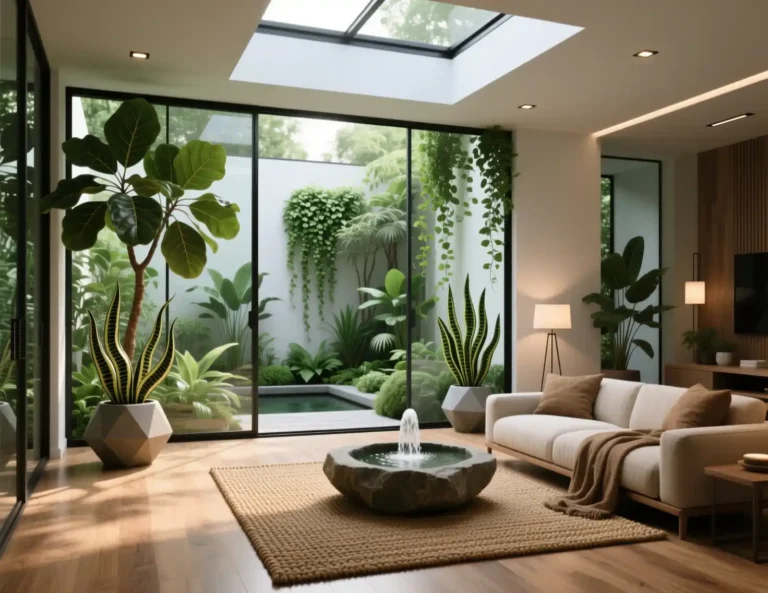
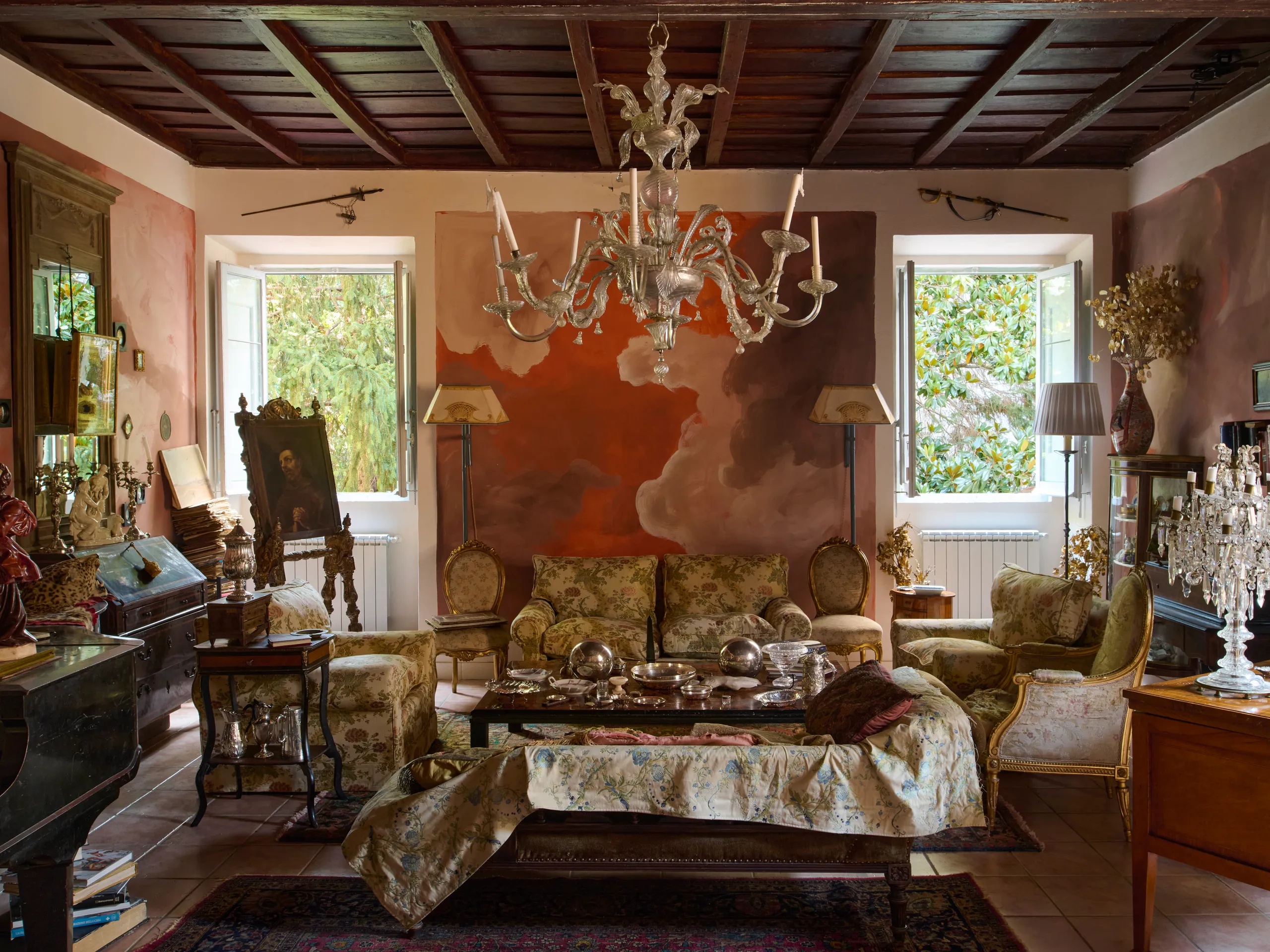
There is a certain romance to an Italian house interior — a feeling of old-world warmth, of meals shared under arched doorways, of sunlight filtering through shuttered windows onto terracotta floors. You’ll love how an Italian house interior blends rustic materials (stone, wood, wrought iron) with elegant touches (crystal chandeliers, marble countertops, linen drapes). Picture a large farmhouse kitchen with a central island, a wine cellar with wooden tables, or a living room with high ceilings and a grand stone fireplace.
From living rooms filled with white furniture to bathrooms with stone walls and arched windows, from archways leading into dining rooms to kitchens with lemons hanging from beams, these Italian house interior inspirations celebrate the art of relaxed, rustic luxury. Let’s wander through spaces that feel like a Tuscan villa — each one proof that the best homes are lived in, loved, and layered with history.
1. Open Flow – Furniture Next to an Arched Opening
Unfurl this Italian living room where furniture is arranged next to an open arched doorway, the space flowing seamlessly into the next room. This Italian house interior emphasizes connection and airflow, the arch a classic architectural feature. You’ll love how the furniture respects the arch, not blocking it but framing it.
Arched doorways are a signature of Italian house interior design. They soften the transition between rooms and add a sense of old-world craftsmanship. Arrange furniture to highlight, not hide, these architectural features.
2. Rustic Bath – A Tub, Sink, and Leaning Ladder
Step into this bathroom — a freestanding tub, a simple sink, and a wooden ladder leaning against the wall for towels. This Italian house interior bathroom is rustic and unpretentious, the materials natural and warm. You’ll appreciate how the ladder adds vertical interest and practical storage.
In an Italian house interior, bathrooms often feature natural stone, wood, and simple fixtures. A ladder as a towel rack is both functional and charming, echoing the rustic feel.
3. Mirror & Light – A Living Room with a Large Mirror
Notice the large mirror — a gilt or wooden framed mirror reflecting light around this Italian living room. This Italian house interior trick makes the room feel larger and brighter, the mirror bouncing light from windows and candles. You’ll love how the mirror adds a touch of old-world glamour.
Mirrors are essential in an Italian house interior. Choose antique-style frames in gold or dark wood. Place them opposite windows to maximize natural light.
4. Gathering Around – A Dining Table Full of Chairs
See the full table — chairs surrounding a large dining table, ready for a long, leisurely Italian meal. This Italian house interior dining room is built for family and friends, the table the undisputed heart of the home. You’ll love how the chairs invite lingering.
A large dining table is essential in an Italian house interior. Choose a solid wood table that can be extended for guests. The chairs should be comfortable for hours of conversation and course after course.
5. Wine Cellar – Wooden Tables and Stools for Tasting
Descend into this wine cellar — wooden tables and stools arranged for tasting, bottles lining the stone walls. This Italian house interior is a dream for oenophiles, the cellar as much a social space as a storage area. You’ll appreciate how the warm wood contrasts with the cool stone.
A wine cellar is a wonderful addition to an Italian house interior. Use stone or brick for the walls, wood for the tasting table, and wrought iron for the racks. The space should feel like a cave, but a comfortable one.
6. Island & Chandelier – A Grand Kitchen Centerpiece
Look at the large kitchen island — a substantial workspace topped with wood or marble, a chandelier hanging above. This Italian house interior kitchen is the heart of the home, the island where family gathers. You’ll love how the chandelier adds unexpected elegance to a rustic room.
A chandelier over the kitchen island is a classic Italian house interior touch. Choose a wrought iron or crystal fixture that complements the rustic feel. The island should be large enough for meal prep and casual dining.
7. Counter Abundance – A Kitchen with Lots of Workspace
See the expansive counters — a kitchen designed for cooking, with plenty of space for chopping, rolling pasta, and setting out antipasti. This Italian house interior prioritizes function without sacrificing beauty. You’ll appreciate how the counters are both practical and beautiful.
In an Italian house interior, the kitchen must be functional for serious cooking. Choose durable, beautiful materials: butcher block, marble, or soapstone. The counters should be wide and uncluttered, ready for action.
8. Another Abundant Kitchen – More Counter Space
Notice the repetition — another Italian house interior kitchen with lots of counter space, the theme clearly important. The room is designed for cooking as a form of love. You’ll love how the open shelving displays colorful ceramics and ingredients.
Open shelving is a hallmark of Italian house interior kitchens. Display colorful dishes, jars of dried pasta, and bottles of olive oil. The shelves keep essentials within reach and add visual warmth.
9. White & Bright – A Living Room with White Furniture
Step into this white living room — light-colored furniture against stone or plaster walls. This Italian house interior is airy and serene, the white reflecting light from high windows. You’ll love how the room feels both rustic and fresh.
White or cream furniture can work beautifully in an Italian house interior, balancing the weight of stone walls and dark wood beams. Use washable slipcovers for practicality.
10. Arched Alcove – Furniture Placed Next to an Arch
See the arched opening — furniture arranged next to it, respecting the architecture. This Italian house interior uses the arch as a frame, the furniture complementing rather than competing. You’ll appreciate how the arch adds character to an otherwise simple room.
Arches are a gift in an Italian house interior. Never block them with furniture. Instead, arrange seating so the arch is visible, or use the space beneath it for a console table.
11. Island Repeat – Another Kitchen with a Statement Chandelier
Notice the pattern — another Italian house interior with a large island and a chandelier above. The repetition across pins shows this is a beloved combination. You’ll love how the chandelier adds elegance to the hardworking kitchen.
If you have a kitchen island, hang a statement light fixture above it. The fixture should be proportional to the island (one-half to two-thirds the width) and hang 30-34 inches above the counter.
12. Kitchen-Living Arch – An Archway Connecting Two Rooms
Look through the archway — from the kitchen into the living room, the two spaces connected but separate. This Italian house interior layout maintains openness while defining distinct zones. You’ll appreciate how the arch frames the view from room to room.
Arched openings between public rooms are a classic Italian house interior feature. They allow light and conversation to flow while providing a sense of separation. Keep the area under the arch clear of furniture.
13. Grand Scale – High Ceilings and Stone Walls
Step into this grand living room — high ceilings, stone walls, and a sense of history. This Italian house interior feels like a villa, the scale impressive yet warm. You’ll love how the room is filled with comfortable furniture that doesn’t compete with the architecture.
In a room with high ceilings, use large-scale furniture to avoid a dwarfed feeling. Hang art at eye level, and use tall bookcases or plants to fill vertical space.
14. Fireplace Focus – Furniture Arranged Around a Hearth
See the fireplace — the focal point of this Italian living room, with furniture arranged around it. This Italian house interior is designed for cozy evenings, the fire warming the stone walls. You’ll love how the mantel displays candles and simple decor.
A fireplace is essential in an Italian house interior. Arrange seating to face the hearth, even if the fireplace is non-functional. The mantel is a perfect spot for a mirror, art, or a collection of candlesticks.
15. Cooking Zone – Oven, Sink, and Expansive Counters
Admire the work triangle — oven, sink, and counters all within easy reach. This Italian house interior kitchen is designed for efficiency, the layout as beautiful as it is functional. You’ll appreciate how the large window over the sink brings in light.
A well-designed work triangle is key in an Italian house interior kitchen. The sink, stove, and refrigerator should form a triangle with no more than 26 feet total perimeter. The counters should be between each zone.
16. Bathroom Sanctuary – Stone Walls and an Arched Window
Step into this bathroom — stone walls, an arched window, and a sense of ancient calm. This Italian house interior bathroom feels like a Roman bath, the natural materials warm and grounding. You’ll love how the window brings in soft, filtered light.
Stone walls in a bathroom are a hallmark of Italian house interior design. Seal the stone to prevent moisture damage. Keep the rest of the room simple — a pedestal sink, a mirror, a few candles.
17. Dining Room Approach – An Archway Leading to the Table
Look through the archway — a view of the dining room, the table and chairs visible beyond. This Italian house interior creates anticipation, the arch framing the dining area. You’ll love how the arch makes entering the dining room feel like an event.
Use archways to create a sense of progression through your Italian house interior. The living room flows to the dining room, which flows to the kitchen. Each arch is a new chapter.
18. Lemons & Linen – A Rustic Kitchen Detail
See the lemons hanging — a string of dried lemons or fresh citrus hanging from a beam in this Italian kitchen. This Italian house interior detail is both decorative and practical, the lemons adding a pop of yellow. You’ll love how the touch of fruit makes the kitchen feel lived-in and authentic.
Small touches make an Italian house interior special. Hang dried herbs, strings of garlic, or cured meats from beams. Display colorful ceramics and copper pots. The kitchen should feel like a pantry.
19. Another Filled Room – More Furniture, More Warmth
Notice the abundance — another Italian house interior living room filled with comfortable furniture, the space layered and warm. You’ll love how the room feels collected over time, not purchased in a weekend.
An Italian house interior should look like it evolved over generations. Mix new pieces with antiques, add family photos, and layer textiles. The room should feel personal, not like a catalog.
20. Staircase & Plants – A Living Room with a Staircase and Potted Plants
See the staircase — a wooden or stone staircase leading up from the living room, with potted plants at its base. This Italian house interior uses the staircase as a sculptural element, the plants softening the vertical lines. You’ll appreciate how the stairs are a focal point, not an afterthought.
In an Italian house interior, don’t hide the staircase — celebrate it. Use a wrought iron or wooden railing, and place a large potted plant at the bottom. The stairs become part of the decor.
21. Light-Filled Grandeur – A Living Room with Many Windows
Step into this bright room — a large open living room with lots of windows, the Italian sun pouring in. This Italian house interior feels connected to the outdoors, the stone walls and terracotta floors warm in the light. You’ll love how the windows make the room feel even larger.
Natural light is essential in an Italian house interior. Keep window treatments minimal (linen curtains or shutters). Use mirrors to bounce light deeper into the room. The goal is a space that glows.
🍝 Rustico Compass: 6 Fresh Blueprints for an Italian House Interior
- 🏛️ The Arch Principle: In an Italian house interior, use arches wherever possible — doorways, windows, alcoves, and niches. Arches soften the geometry of a room and add a sense of old-world craftsmanship. If you can’t add structural arches, use arched mirrors, arched headboards, or arched wall art to evoke the same feeling.
- 🧱 The Material Trio: An Italian house interior relies on three natural materials: stone (walls, floors, fireplace), wood (beams, furniture, shutters), and wrought iron (light fixtures, railings, hardware). Use these three materials throughout the home for a cohesive, authentic look. Avoid synthetic materials or high-gloss finishes.
- 🌿 The Kitchen Garden Connection: In an Italian house interior, the kitchen should feel connected to the garden. Use potted herbs on the windowsill, display fresh vegetables in a bowl, and hang dried herbs from beams. The food you cook should feel like it came from just outside the door.
- 🕯️ The Warm Lighting Layer: In an Italian house interior, use warm, golden light. Choose bulbs with a color temperature of 2700K or lower. Use wrought iron chandeliers, wall sconces, and table lamps with fabric shades. The light should feel like candlelight, not fluorescent.
- 🧺 The Textile Layer: An Italian house interior uses natural textiles: linen, cotton, wool, and jute. Use linen curtains, cotton slipcovers, wool throws, and jute rugs. Avoid synthetics, which look and feel wrong in a rustic setting. The textiles should be simple, durable, and slightly wrinkled — perfection is not the goal.
- 🍷 The Gathering Table: In an Italian house interior, the dining table should be large enough to seat at least eight people, even if you rarely have that many guests. A long, solid wood table (reclaimed is ideal) invites lingering meals. Use mismatched chairs for an authentic, collected look. The table should feel like the heart of the home.
Frequently Asked Questions
Q: What colors are typical in an Italian house interior?
Ans: An Italian house interior is known for warm, earthy neutrals: creamy whites, warm beiges, soft taupes, and terracotta. Accent colors are drawn from nature: olive green, ochre yellow, burnt orange, and deep red. Avoid cool colors (icy blue, true grey) and bright, saturated hues. The palette should feel like the Italian countryside: sun-baked earth, ripe tomatoes, and olive groves.
Q: What flooring is best for an Italian house interior?
Ans: The most authentic Italian house interior flooring is terracotta tile, which is warm, durable, and ages beautifully. For a more practical option, use large-format travertine or limestone tiles. Wide-plank oak or chestnut wood floors are also appropriate. Avoid dark wood, which feels more English or French, and avoid wall-to-wall carpet. Use jute or wool rugs on the tile or stone floors for warmth.
Q: Are high ceilings necessary for an Italian house interior?
Ans: While many Italian villas have high ceilings, an Italian house interior can work in any space. In a room with low ceilings, paint the ceiling white or a light cream, and use vertical stripes on the walls to create the illusion of height. Use low-profile furniture and avoid overhead light fixtures that hang down. The key is to maximize light and keep the space feeling open, not cramped.
Q: How do I mix modern appliances with a rustic Italian style?
Ans: In an Italian house interior, modern appliances can be integrated by choosing panel-ready models (refrigerator, dishwasher) that accept cabinet fronts. Stainless steel can work if it’s brushed or matte, not shiny. Hide small appliances behind cabinet doors. The goal is that the kitchen feels like it evolved, not that it was renovated yesterday. A vintage-style stove (like a La Cornue or a reproduction) can be a beautiful centerpiece.
Q: What are the best light fixtures for an Italian house interior?
Ans: For an Italian house interior, choose wrought iron chandeliers with candle-style bulbs, wall sconces in the same material, and simple pendant lights with linen shades. Avoid shiny brass, crystal (unless it’s a very traditional villa), or modern chrome and glass. The light fixtures should look like they’ve been there for a century. Use warm bulbs (2700K) and put everything on dimmers.
Conclusion
You’ve explored twenty-one Italian house interior spaces — from arched doorways and stone walls to grand kitchens and wine cellars, from bathrooms with ladders to living rooms with fireplaces. Each room shares a common philosophy: beauty is found in natural materials, simple forms, and a life well-lived. An Italian house interior is not about perfection; it’s about warmth. It’s about the patina on a wooden table, the softness of linen curtains, the smell of herbs drying in the kitchen, and the sound of laughter around a long table.
Now it’s your turn to bring a little bit of Tuscany into your home. Start with one room — perhaps the kitchen or the living room. Add natural materials: stone, wood, wrought iron. Use warm, earthy colors. Hang a wrought iron chandelier. Place a large wooden table at the center of the room. Light a candle, pour a glass of wine, and invite someone you love to sit with you. Your Italian house interior is not a destination; it’s a feeling. And you can have it wherever you are. 🍷