There’s a special kind of magic in a nursery that feels like it’s been tucked inside a country cottage for generations — soft floral prints, warm wooden cribs, walls the color of buttercream or sage, and the gentle glow of afternoon light through lace curtains. A cottage nursery isn’t about perfection; it’s about warmth, nostalgia, and creating a space where both baby and parent feel at peace. You’ll love how the combination of vintage-inspired details and natural materials makes the room feel like a hug, like a meadow seen through a rain-streaked window.
From yellow walls with white furniture to hand-painted flower murals, from rustic farmhouse accents to jumbo anemone prints, these cottage nursery ideas will inspire you to create a room that’s both timeless and tender. Imagine rocking your little one in a chair beside a crib that’s surrounded by stuffed animals on open shelves, the scent of beeswax candles mixing with baby powder. Your nursery can be that cozy — a little piece of the countryside, no matter where you live. Let’s build a room that feels like coming home.
Wildflower Whispers: Cottage Nursery Inspirations from the Pinterest Trail
1. Sunshine Walls – Yellow & White Cottage Warmth
Step into buttery sunshine with a baby’s room featuring soft yellow walls and crisp white furniture. This cottage nursery palette is as cheerful as a field of buttercups, yet gentle enough for sleepy mornings. You’ll love how the yellow reflects natural light, making even a small room feel bright and airy, while the white crib and dresser keep the look fresh and clean.
Yellow is a classic cottage nursery color because it’s warm without being overwhelming. Choose a pale, creamy yellow — think butter or lemon curd — rather than a bright, neon shade. Pair with white linens, natural wood accents, and a few fresh or dried flowers in a small vase.
2. Butterfly Kisses – Yellow, White & Fluttering Wings
Add a touch of whimsy to your cottage nursery with butterfly accents scattered across yellow walls and white furniture. The delicate wings echo the lightness of a cottage garden, where monarchs and swallowtails dance among the blooms. You’ll feel the room come alive with movement and color, like a meadow on a summer afternoon.
Butterfly decals, mobiles, or embroidered pillows are easy ways to bring this theme into your cottage nursery. Stick with two or three butterfly species for a cohesive look. Place them near the window or above the crib, where they’ll catch the light.
3. Cabin Cozy – Wooden Walls & White Furniture
Embrace rustic warmth with wooden walls that wrap around a cottage nursery like a gentle hug, contrasted by bright white furniture. The wood grain adds texture and history, like the inside of a country cabin, while the white crib and dresser keep the room from feeling too dark. You’ll appreciate how the natural material absorbs sound, creating a quiet, peaceful environment for naps.
Wooden walls in a cottage nursery can be achieved with shiplap, beadboard, or even reclaimed barn wood. Keep the wood tone light — pine or birch — to maintain a bright feel. Add soft textiles (a crochet blanket, a sheepskin rug) to soften the rustic edges.
4. Artful Corner – Classic Character Art by the Crib
Create a focal point around the crib with warm-toned artwork that tells a story. In this cottage nursery, classic character prints — think Beatrix Potter or vintage fairy tales — hang above the crib, their soft watercolors echoing the room’s gentle palette. You’ll love how the art sparks imagination long before baby can read, like illustrations in a beloved storybook.
For a cottage nursery art wall, choose prints with warm, muted colors: sepia, sage, rose, and cream. Use simple wooden frames, perhaps painted white or left natural. Hang them at a height safe above the crib, and group them in an asymmetrical cluster for that collected-over-time feel.
5. Simple & Sweet – White Walls, Warm Wood Floors
Let the bones of the room shine with a cottage nursery that’s all about white walls and warm wood floors. The simplicity is the beauty — the white reflects light and makes the room feel open, while the wood grain adds organic texture underfoot. You’ll feel the calm of a New England farmhouse, where the architecture does the decorating.
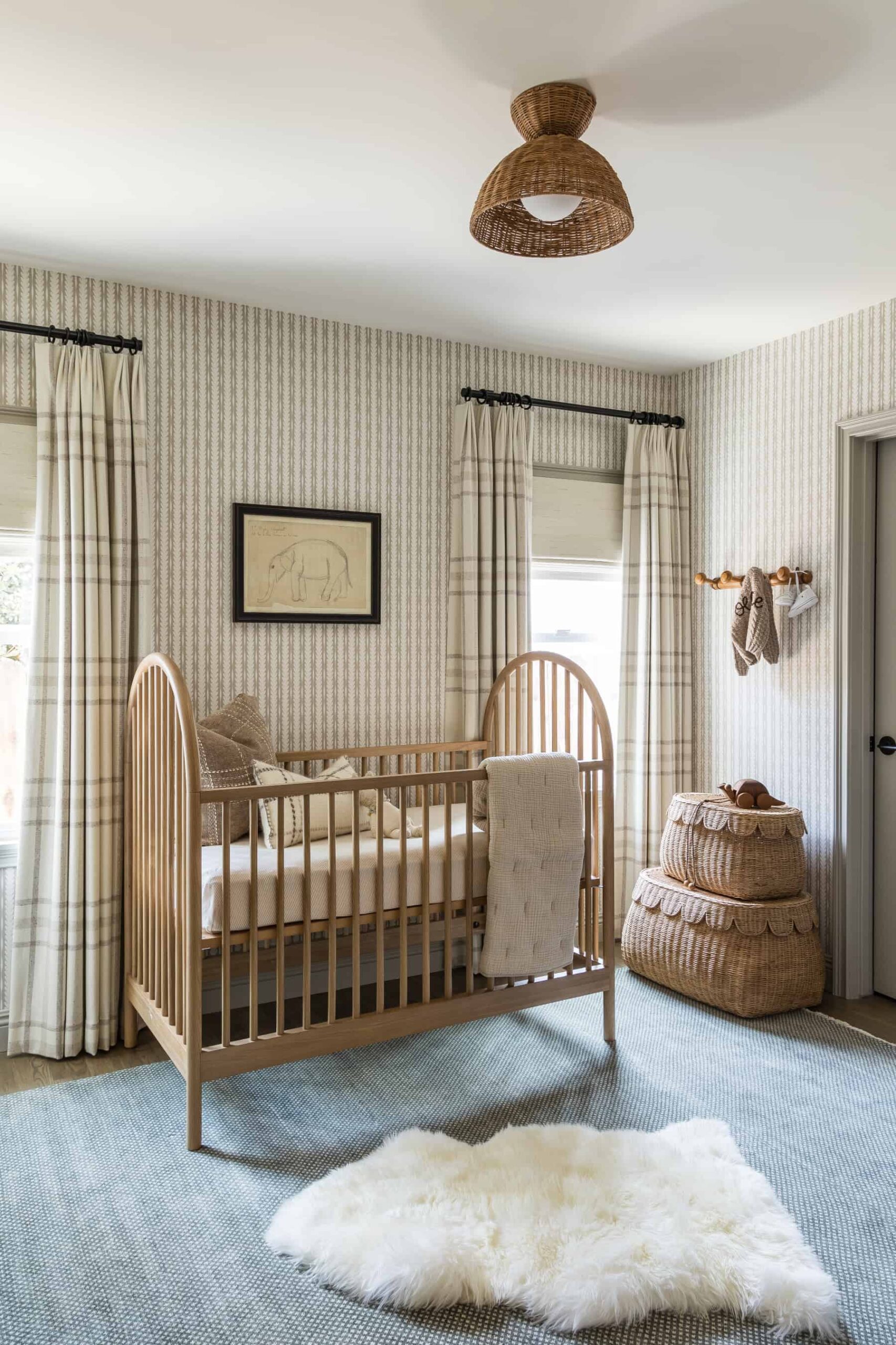
In a minimalist cottage nursery, choose a few quality pieces: a solid wood crib, a cozy rocking chair, a simple rug. Add softness with linen curtains and a handful of stuffed animals. The restrained palette lets your baby’s toys and books become the color.
6. Rustic Farmhouse – Barn Charm for Baby
Bring the farmhouse aesthetic into your cottage nursery with rustic wood accents, galvanized metal buckets, and soft linen textiles. This style is sturdy and sweet, like a barn that’s also a garden shed. You’ll love how the natural materials age beautifully, gaining character as your child grows.
Rustic farmhouse elements in a cottage nursery include a wooden sign with baby’s name, a wire basket for stuffed animals, and a vintage-style quilt. Keep the palette neutral — cream, beige, soft gray — with small touches of sage or blush. The result is cozy, not cluttered.
7. Garden Fresh – Green, White & Floral Accents
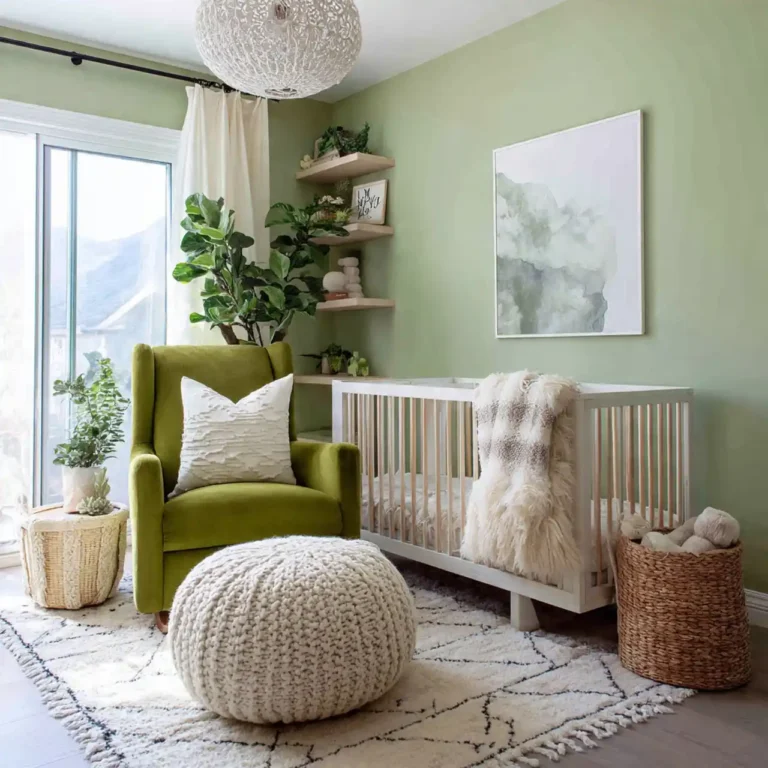
Step into a spring meadow with a cottage nursery decorated in soft green and white, with fresh or dried flowers adding life. The green walls or accents feel as soothing as a canopy of leaves, while the white furniture keeps the room bright. You’ll feel like you’re rocking your baby in a sun-dappled garden.
Green is a wonderful cottage nursery color because it’s calming and connects to nature. Choose a muted sage, eucalyptus, or moss tone. Add white crib linens, a cream rug, and a few potted plants (real or faux). A floral wreath on the wall completes the garden feel.
8. Cottagecore Dream – The Full Romantic Aesthetic
Embrace the full cottagecore aesthetic in a cottage nursery filled with floral prints, vintage linens, and handcrafted details. This is a room that feels like it belongs to a fairy-tale child — lace-trimmed curtains, a canopy of dried flowers, and a crib draped in quilts. You’ll love how every object seems to have a story, like heirlooms passed down through generations.
A cottagecore cottage nursery celebrates handmade and vintage. Look for embroidered pillows, crochet blankets, wooden toys, and pressed flowers in frames. The palette is soft and muted — cream, blush, sage, lavender — with plenty of natural textures. It’s romantic without being precious.
9. Stuffed Animal Gallery – Open Shelves of Cuddly Friends
Turn stuffed animals into decor by displaying them on open shelves in your cottage nursery. The furry friends become a colorful, textural gallery, each one a character in your baby’s story. You’ll appreciate how the shelves keep the animals off the floor and within easy reach for cuddles, like a menagerie of gentle guardians.
For a cottage nursery, use floating wooden shelves with a natural finish. Arrange stuffed animals by size and color, mixing in a few books or small plants. The display will grow with your child, as new animals join the collection.
10. Hand-Painted Meadow – Flowers on the Nursery Wall
Commission a mural or DIY with hand-painted flowers climbing the wall behind the crib. This cottage nursery feature is one-of-a-kind, turning the room into a work of art. You’ll love how the flowers seem to grow, their stems reaching toward the ceiling, like a secret garden that only exists in this room.
If a full mural feels daunting, paint a single large flower or a cluster of wildflowers in one corner. Use soft, muted colors — watercolor-style pinks, lavenders, and sage greens. The hand-painted touch adds warmth and personality that wallpaper can’t match.
11. Canopy Dreams – Pink & Floral Over the Crib
Drape a soft pink canopy over the crib in your cottage nursery for a touch of storybook romance. The fabric billows gently, creating a sense of enclosure and magic, like sleeping under a blooming cherry tree. You’ll feel like you’re putting your baby down for a nap in a fairy glade.
A canopy in a cottage nursery should be lightweight and breathable — think gauze or muslin. Hang it from a simple hoop or a wall bracket. Keep it out of the crib itself (for safety) and use it as a decorative element above and around the sleeping area.
12. Sunny Simplicity – Yellow & White with Vintage Touches
Keep it simple and sunny with a cottage nursery that pairs yellow walls with white furniture and a few vintage accessories. An antique rocking chair, a wooden toy chest, or a sampler on the wall adds age and character. You’ll appreciate how the old pieces warm up the new, like a well-loved quilt passed down to a new generation.
Vintage touches in a cottage nursery don’t have to be expensive. Look for a used dresser you can paint, a wooden frame from a thrift store, or a crochet blanket from a family member. These pieces carry stories, making the nursery feel layered and loved.
13. The Rocking Corner – Chair & Crib Together
Create the classic duo of rocking chair and crib in your cottage nursery. These two pieces define the room’s purpose: rest and comfort. You’ll spend countless hours in that chair, rocking and singing, while the crib waits nearby for the next nap. The arrangement feels as natural as a mother bird beside her nest.
Position the rocking chair close to the crib but not blocking access. Add a small side table for a lamp, a book, and a water glass. A soft rug under both pieces ties them together. This setup will be the heart of your cottage nursery.
14. Sunny Corner – Sun Decorations Brightening the Crib
Hang sun-themed decorations in the corner above the crib — a sun mobile, a sunburst mirror, or painted wooden rays. This cottage nursery theme brings warmth and joy, even on cloudy days. You’ll love how the sun motifs echo the yellow walls or warm wood tones, like a little piece of summer saved for winter mornings.
Sun decorations work beautifully in a cottage nursery with a nature theme. Pair with cloud mobiles, bird prints, or flower decals. The sun becomes a friendly face in the room, watching over your baby’s dreams.
15. Teddy’s Spot – A Bear Keeps Watch by the Crib
Place a teddy bear in a small chair or on a shelf beside the crib. This cottage nursery detail is sweet and sentimental — the bear becomes your baby’s first friend, a silent guardian through the night. You’ll smile every time you see its button eyes and worn fur, like a character from a vintage children’s book.
Choose a teddy bear that feels timeless — classic brown or cream, with movable arms and legs. Give it its own tiny chair or a special spot on a shelf. As your child grows, the bear will become a beloved companion, not just a decoration.
16. Wallpapered Wonder – Floral Prints on the Wall
Paper one wall in a floral print for a classic cottage nursery look. The wallpaper becomes the room’s jewelry — a burst of chintz or trellis roses that feels like an English garden. You’ll love how the pattern adds depth and interest without cluttering the space with too many objects.
When using floral wallpaper in a cottage nursery, keep the rest of the room simple. Choose white furniture, neutral linens, and a few solid-colored accessories. The wallpaper should be the star. Look for small-scale prints — too large can overwhelm a small room.
17. Textured Foundation – A Rug Under the Rocking Chair
Anchor the seating area with a soft rug beneath the crib and rocking chair. In a cottage nursery, a braided wool or neutral jute rug adds warmth underfoot and defines the space. You’ll appreciate the cushioning during late-night feedings, and the texture adds a cozy, handmade feel.
Choose a rug that’s large enough to extend beyond both the crib and the chair. Natural fibers like wool, cotton, or jute work beautifully in a cottage nursery. Avoid high-pile shag (hard to clean) and synthetic materials (they don’t have the same organic feel).
18. Heirloom Wood – Furniture That Ages Gracefully
Choose wooden furniture for your cottage nursery — a crib, a dresser, a bookshelf in oak, maple, or pine. The natural material brings warmth and will age beautifully, developing a patina over time. You’ll love how the wood grain adds organic texture, like the rings of a tree telling the story of its years.
Look for furniture with simple, classic lines — nothing too trendy. Solid wood can be repainted or refinished as your child grows, making it a lasting investment. In a cottage nursery, mix wood tones for a collected look, or keep them consistent for a more uniform feel.
19. Diptych Dreams – Two Pictures Above the Crib
Hang a pair of matching pictures above the crib in your cottage nursery. Two prints create a diptych — a conversation between two images. You’ll love how the pair offers more visual interest than a single piece, without the busyness of a full gallery wall, like two windows looking into the same meadow.
Choose prints that share a theme or color palette: two botanical illustrations, two animal portraits, or two scenes from a storybook. Use identical frames for a clean look, and hang them at the same height, spaced a few inches apart.
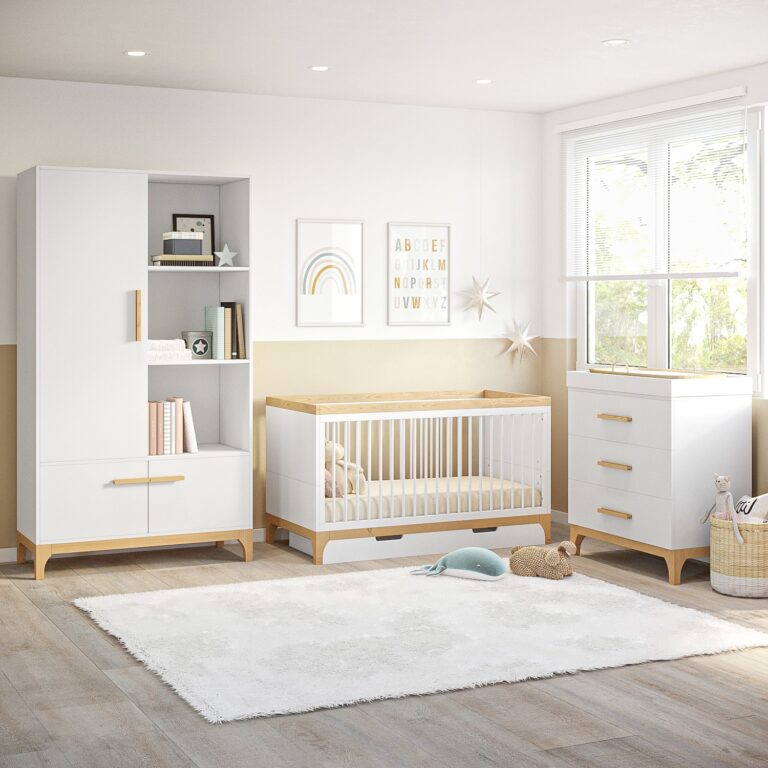
20. Light-Filled Layout – Crib & Dresser Near the Window
Position the crib and dresser near the window to flood your cottage nursery with natural light. The sun will warm the room during morning naps and create a cheerful glow. You’ll appreciate how the light bounces off the white furniture, making the whole space feel larger and more open, like a sunroom for your baby.
When placing furniture near a window, consider safety. Keep cribs away from blind cords. Use sheer curtains to diffuse harsh sunlight. The dresser can double as a changing table, with the window providing task lighting for diaper changes.
21. Sage Serenity – Green Walls, White Crib
Paint the walls a soft sage green in your cottage nursery, with a white crib as the focal point. The green feels as calming as a forest floor, while the white keeps the room from feeling too dark. You’ll feel your shoulders relax when you walk in, like stepping into a shaded grove.
Sage green pairs beautifully with natural wood, cream, and blush pink. Use it on all four walls for a cocooning effect, or on a single accent wall for a lighter touch. Add a few botanical prints to echo the color.
22. Wild Touch – An Animal Print Rug on the Floor
Add a whimsical animal print rug to your cottage nursery — think a stylized fox, bunny, or bear. The rug adds pattern and personality underfoot, a soft landing for tummy time. You’ll love how it brings the room to life without overwhelming the walls, like a quiet creature curled up on the floor.
Choose an animal print rug in muted, cottage-friendly colors: cream and taupe, blush and sage, or navy and cream. Avoid bright, cartoonish colors that feel more modern. The rug should feel like it belongs in a storybook illustration.
23. Dramatic Bloom – A Jumbo Anemone Mural
Make a bold statement with a jumbo anemone floral mural in navy and blush. This cottage nursery is for parents who love drama — the oversized flowers feel modern and moody, but the blush softens the dark background. You’ll feel like you’re inside a sophisticated botanical print, the flowers towering like trees in a dream forest.
If a full mural is too intense, use the pattern on a single accent wall or as removable wallpaper. Pair with white furniture and simple bedding to keep the room from feeling too dark. The contrast will be stunning.
24. The Tried & True – Crib, Chair & Rug Together
Return to the essentials in a cottage nursery that’s just crib, chair, and rug. This simplicity is a luxury — the three pieces define the room’s purpose without any fuss. You’ll appreciate how easy it is to keep clean and how calm it feels, like a Quaker meeting house but for a baby.
When you keep your cottage nursery minimal, choose each piece with care. Invest in a beautiful crib, a comfortable glider, and a rug that ties them together. Add one or two accessories — a lamp, a plant, a piece of art — but resist the urge to fill every corner. The empty space is part of the design.
25. Double Blessing – Two Cribs, Shared Cottage Charm
Design for twins with a cottage nursery that features two cribs, a shared dresser, and coordinating pictures on the wall. The symmetry is soothing — two of everything, like matching wildflowers in a field. You’ll love how the room can accommodate double the baby gear without feeling crowded, each side a mirror of the other.
In a two-crib cottage nursery, keep the color palette simple so the room doesn’t feel chaotic. White cribs, soft walls, and a single accent color (like sage or blush) will unify the space. Position the cribs on opposite walls or side by side with a shared dresser between them.
🌷 The Cottage Nursery Companion: 6 Steps to a Cozy, Country Baby Room
- 🎨 Choose a Soft, Natural Palette: Think butter yellow, sage green, dusty blush, or creamy white. These colors feel like they’ve faded gently in the sun, like an old-fashioned watercolor. For a cottage nursery, avoid bright, primary colors or neon accents — they break the spell of gentle nostalgia.
- Mix Old & New: A vintage rocking chair next to a new crib. A hand-me-down quilt on a modern changing table. In a cottage nursery, the mixture of old and new creates depth and interest. Don’t be afraid of a little wear or imperfection — it adds character.
- 🌿 Bring in Natural Textures: Woven baskets, wooden toys, linen curtains, a wool rug. These organic materials are the heart of a cottage nursery. They soften the room and connect it to the outdoors. Avoid too much plastic or shiny synthetics, which feel too modern.
- 🖼️ Use Floral or Botanical Prints Sparingly: A wallpaper accent wall, a pair of botanical prints, or a floral crib sheet. In a cottage nursery, flowers should feel like they’re growing naturally in the room, not plastered everywhere. Choose one or two floral elements and let them be the stars.
- 💡 Soft, Warm Lighting: A dimmable overhead light, a lamp on the dresser, and perhaps a string of fairy lights. In a cottage nursery, avoid harsh, cool-toned bulbs. You want the room to glow like a lantern at dusk, especially during late-night feedings.
- 🧸 Edit, Edit, Edit: A cottage feels cozy, not cluttered. For a cottage nursery, choose a few favorite stuffed animals, a small stack of books, and a single piece of art per wall. Rotate items seasonally to keep the room fresh. The empty space is what makes the room feel peaceful.
Frequently Asked Questions
Q: Is a cottage nursery safe for a baby?
Ans: Absolutely. A cottage nursery is about style, not safety shortcuts. Follow all standard nursery safety guidelines: use a firm mattress with a tight-fitting sheet, keep the crib free of bumpers and loose blankets, anchor furniture to the wall, and use window blind cord safety devices. The vintage aesthetic doesn’t mean compromising on modern safety.
Q: What’s the difference between cottage and farmhouse nursery?
Ans: A cottage nursery feels softer, more floral, and more romantic — think chintz, ruffles, and pastels. A farmhouse nursery is more rustic and neutral — think galvanized metal, burlap, and “buffalo check.” Cottage leans English countryside; farmhouse leans American prairie. Both are cozy, but cottage is more whimsical and floral.
Q: Can I do a cottage nursery on a budget?
Ans: Yes. The cottage nursery aesthetic is perfect for thrifting. Look for wooden furniture at garage sales (paint it white), vintage quilts at thrift stores, and botanical prints at estate sales. The “worn and loved” look is a feature, not a bug. Paint the walls a soft, affordable color, and add character with inexpensive accessories like baskets and secondhand books.
Q: What flooring works best in a cottage nursery?
Ans: Wide-plank wood floors (or wood-look laminate) are ideal. In a cottage nursery, real wood with a natural or whitewashed finish adds warmth. Add a soft rug (wool, jute, or cotton) over the wood for comfort during playtime. Avoid wall-to-wall carpet, which can feel too modern and is harder to keep truly clean.
Q: How do I add cottage charm without overwhelming a small nursery?
Ans: Focus on one or two key elements. In a small cottage nursery, use a soft wall color (pale yellow or sage), one floral accent (a crib sheet or small rug), and a few vintage accessories (a wooden toy, a framed print). Keep the furniture scale small and the layout simple. The charm is in the details, not the quantity.
Conclusion
You’ve wandered through a garden of nursery inspiration — from yellow walls and white furniture to hand-painted flower murals, from rustic deer heads to jumbo anemone prints, from twin cribs to single rocking chairs. Each of these cottage nursery ideas shares a common thread: a love for softness, nature, and the gentle passage of time. This is a room that doesn’t shout for attention; it whispers of Sunday mornings, grandmother’s quilts, and the scent of rain on flowers. It’s a space where your baby can dream of meadows and bunnies, and where you can find peace during those long, beautiful nights.
Now it’s your turn to create your own cottage corner. Start with a soft wall color — a pale butter, a muted sage, or a creamy white. Add a crib in natural wood or painted white. Then layer in texture: a braided rug, linen curtains, a basket of wooden toys. Finally, add a touch of the garden — a floral print, a small vase of dried flowers, or a botanical mobile above the changing table. Your cottage nursery will be more than a room; it will be a feeling, a memory in the making. Your little one is waiting. Go ahead and make it cozy. 🌼