You step inside and the world slows down — the hiss of the espresso machine, the low murmur of conversations, the golden light falling across wooden tables. Great cafe interior design isn’t just about furniture; it’s about feeling. It’s the difference between grabbing coffee and lingering over it, between passing through and settling in. Picture a space where green plants cascade from every corner, where leather banquettes invite you to stay, and where the walls tell stories through art and exposed brick.
Whether you’re dreaming of opening your own shop or simply love collecting inspiration, these cafe interior design ideas will awaken your senses. You’ll discover how to layer textures, arrange seating for both intimacy and community, and use plants and natural materials to create a space that breathes like a forest meadow at dawn. Step into these warm rooms — they smell of fresh brew and possibility, ready to inspire your own hospitality dreams.
1. Green Chairs, Wooden Tables – Nature at Every Seat
Settle into a sage-green chair that feels like moss after rain, paired with a solid wooden table that’s seen a thousand conversations. This cafe interior design choice proves that color can be both calm and characterful — the green ties the room to the outdoors, while the wood grounds it in honesty. You’ll notice how the combination makes every coffee taste richer and every pause feel longer, like a meadow that invites you to sit and stay awhile.
When planning your own cafe interior design, consider green upholstery as your secret weapon. It hides minor spills, evokes nature, and pairs beautifully with almost any wood tone. Add a small vase of fresh herbs on each table, and you’ve created a sensory experience that regulars will crave.
2. Tables, Chairs, and Gallery Walls – Stories Everywhere
Look around at how the walls become part of the conversation in this layered interior. A thoughtful cafe interior design treats every surface as an opportunity — framed prints, local art, vintage mirrors filling the space between tables. The effect feels like a gallery where the art is the backdrop for human connection, like wildflowers growing along a forest path, unexpected and beautiful.
Your cafe interior design should tell your neighborhood’s story. Commission local artists, hang community photos, or create a rotating exhibition wall. Customers will return not just for the coffee but to see what’s new on the walls — a conversation starter built right into your business model.
3. Coffee Shop Front – Large Windows, Welcoming View
Watch the world go by from this street-facing coffee shop with generous windows. A successful cafe interior design embraces transparency — letting light flood in and letting passersby see the warmth inside. The tables and chairs are arranged to face both the street and each other, creating a theater of daily life that never gets old.
Maximize natural light in your cafe interior design by keeping window areas clear of tall obstructions. Use cafe curtains or simple roller shades for glare control, but let the sunshine be your primary lighting during daytime hours. The connection to the outside world makes inside feel more spacious, like a clearing that opens to the sky.
4. Wooden Tables, Chairs, and Plants – The Living Cafe
Breathe deep in this plant-filled sanctuary where every table has a green companion. This cafe interior design uses trailing pothos, tall fiddle-leaf figs, and small succulents to soften the hard edges of chairs and tables. The plants feel like fellow patrons — quiet, calming, and alive. You’ll love how the greenery absorbs sound and releases oxygen, making the air feel as fresh as a canyon morning.
Integrate plants into your cafe interior design by choosing varieties that thrive in indirect light and occasional neglect. Snake plants, ZZ plants, and philodendrons are nearly impossible to kill. Group them on shelves, hang them from ceilings, and place small pots on every table. The investment in greenery pays back in atmosphere tenfold.
5. Leather Seating – Warmth That Ages Well
Sink into butter-soft leather banquettes that only get better with each coffee spill and every conversation. In cafe interior design, leather offers durability and warmth that fabric can’t match — it repels stains, cleans easily, and develops a rich patina over time. The brown tones echo the coffee you’re drinking, creating a sensory harmony that feels deeply satisfying.
Leather seating in your cafe interior design signals quality and permanence. Mix leather banquettes with wooden chairs for visual interest, or go all-leather for a clubby, masculine vibe. Either way, your customers will linger longer when their seat feels like a favorite armchair rather than a waiting-room bench.
6. Living Room Vibes – Lots of Furniture, Lots of Plants
Feel at home in this cafe that blurs the line between public space and private living room. A relaxed cafe interior design might include mismatched armchairs, vintage side tables, and lamps that cast a warm glow. The plants act as gentle room dividers, creating nooks within the larger space — like a forest that offers both open glades and hidden thickets.
Don’t be afraid to mix styles in your cafe interior design. Eclectic furnishings make regulars feel like they’re visiting a friend’s beautifully decorated home rather than a commercial establishment. The key is coherence through color palette — choose two or three main hues and repeat them across different furniture pieces.
7. Coffee Shop Tables and Chairs – Simple and Functional
Appreciate the beauty of simplicity in this no-fuss coffee shop layout. Essential cafe interior design doesn’t require elaborate decor — good tables, comfortable chairs, and enough space between them for private conversation. The room breathes like an open meadow, uncluttered and peaceful, letting the coffee and company be the stars.
When planning your cafe interior design, resist the urge to pack in too many tables. Spacing is hospitality — customers pay for comfort and privacy, not just caffeine. Leave at least 36 inches between table edges so servers can pass easily and conversations stay contained. Your regulars will notice and appreciate the breathing room.
8. Cozy Corner – Soft Beige Seating and Warmth
Hide away in this intimate corner with soft beige seating that feels like a hug. A thoughtful cafe interior design creates pockets of coziness within the larger room — a loveseat by the window, a pair of armchairs near the bookshelf, a banquette tucked under the stairs. These nooks become coveted spots that customers arrive early to claim, like a sunny rock beside a stream.
Your cafe interior design should include at least one “snug” — a small, slightly enclosed seating area perfect for two. It might be a corner with a hanging lamp, a window seat with cushions, or a small booth. These intimate zones keep couples and solo readers coming back, knowing they can find a retreat within your walls.
9. Espresso Machine as Art – The Working Centerpiece
Celebrate the machine that makes the magic happen by placing it front and center. In smart cafe interior design, the espresso machine becomes a performance stage — gleaming chrome, hissing steam, the ritual of grinding and tamping. Customers love watching their drink being made; it builds anticipation and appreciation, like watching a sunrise paint the canyon walls.
Design your cafe interior design with the bar as a focal point, not an afterthought. Use pendant lighting to highlight the espresso machine, keep the counter clean and clutter-free, and leave room for customers to lean in and watch. The bar is your theater — make sure every seat has a view of the show.
10. Living Wall – Plants Cover the Brick
Let greenery climb the walls in this stunning plant-filled interior. A bold cafe interior design might include a living wall — a vertical garden of ferns, ivy, and trailing plants that cleans the air and dazzles the eye. The contrast between rough brick and soft leaves is gorgeous, like moss growing over ancient stones in a forgotten forest.
If a full living wall feels ambitious for your cafe interior design, start smaller. Install wall-mounted planters in a grid pattern, hang macrame plant holders at varying heights, or train a single large vine to climb a trellis. Even a little vertical greenery transforms a flat wall into a landscape.
11. Lots of Tables and Chairs – Buzzing With Energy
Feel the energy of a full house in this bustling coffee shop. A high-volume cafe interior design maximizes seating without feeling cramped — the tables are small (perfect for singles or pairs), the chairs are stackable for flexibility, and the layout encourages quick turnover. The hum of conversation and clink of cups becomes background music, energizing rather than overwhelming.
Balance efficiency with comfort in your cafe interior design. Use a mix of table sizes — small two-tops near the window for solo workers, larger communal tables in the center for groups, and a few cozy corners for extended visits. The variety serves different customer needs, like a meadow that offers both sun and shade.
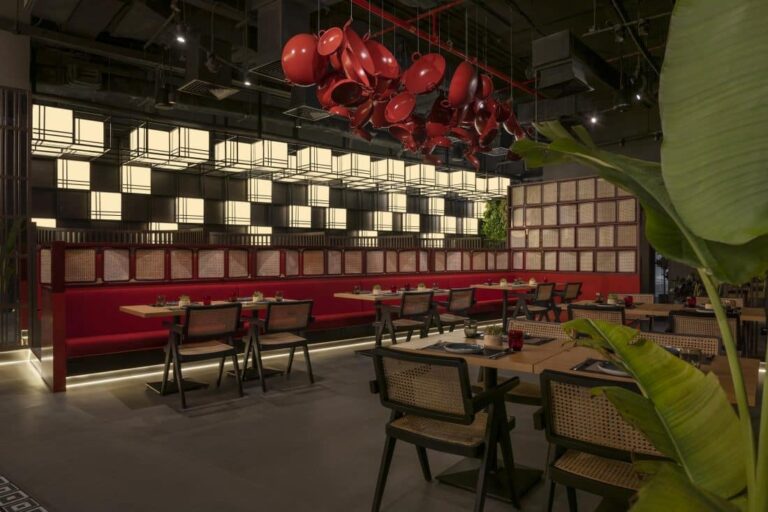
12. Inside Restaurant – Wooden Tables and Chairs
Walk through this warm interior where every surface is wood — tables, chairs, floors, even ceiling beams. A unified cafe interior design uses natural materials to create a sense of harmony and calm. The wood grain tells a story of growth and time, like the rings of an old oak, grounding the space in authenticity that painted surfaces can’t replicate.
Mix wood tones carefully in your cafe interior design. Too much matching can feel flat, while too many contrasts can feel chaotic. Choose a dominant wood (walnut, oak, or maple) for most surfaces, then introduce a secondary tone for accents. The result feels collected over time, not assembled from a catalog.
13. Brick Wall and Wicker – Rustic Charm
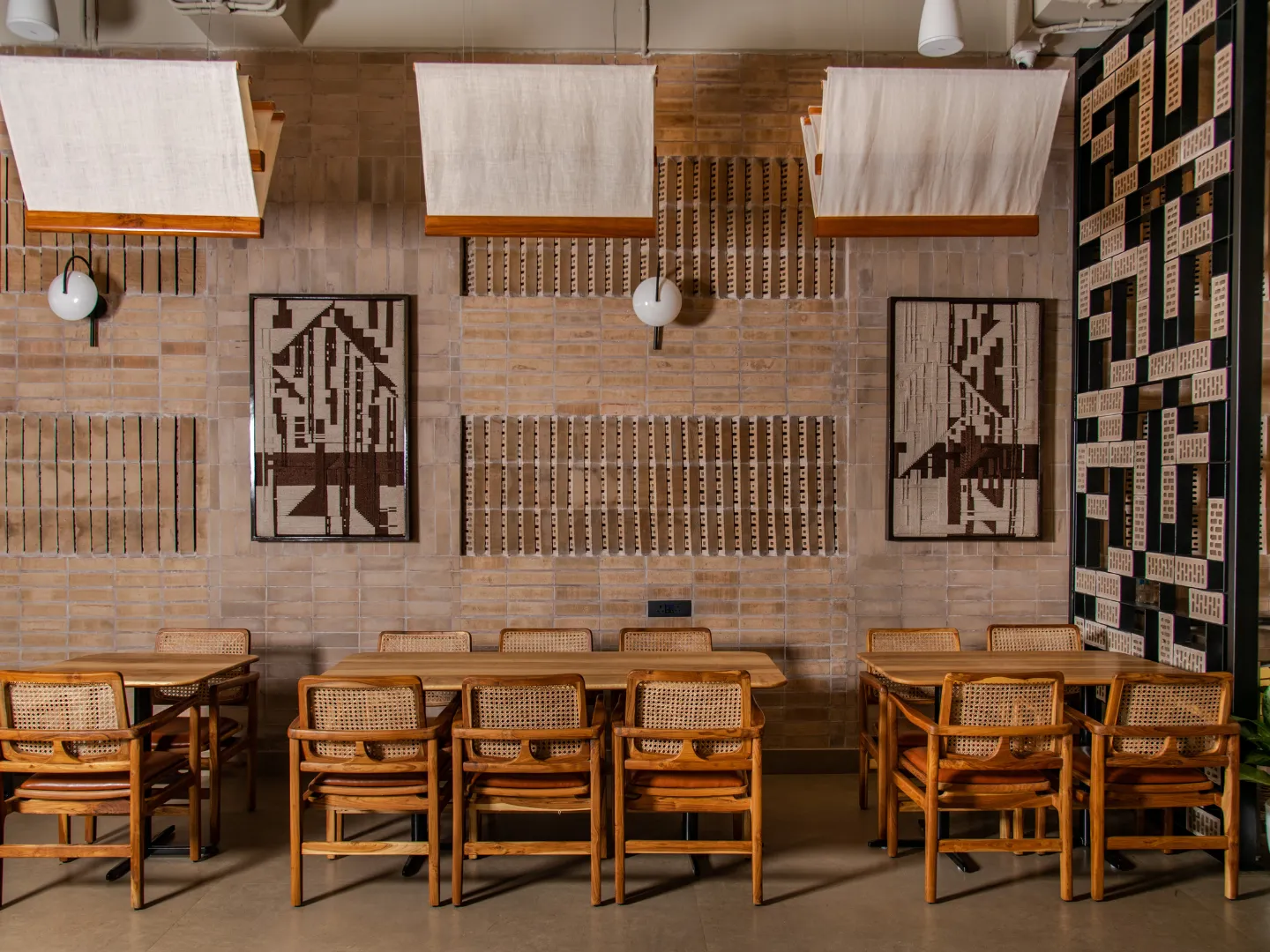
Admire the texture play between rough brick and woven wicker in this rustic setting. A character-rich cafe interior design celebrates materials that age beautifully — brick that’s been there for a century, wicker that develops a honey patina, wood that shows every scratch as a memory. The room feels like it’s been here forever, welcoming generations of coffee drinkers.
Expose original brick or stone in your cafe interior design whenever possible. If your walls are modern, consider brick veneer or limewash paint to add texture. Pair rough surfaces with soft ones — leather seats, wool cushions, linen napkins. The contrast between hard and soft creates tactile interest that customers will notice unconsciously.
14. Orange Booths and Tables – Bold and Cheerful
Embrace bold color with orange booths that energize the entire room. A playful cafe interior design uses saturated hues to create focal points and spark conversation. Orange feels warm, friendly, and slightly retro — like a sunset that lingers on the horizon, refusing to fade into night. The color alone makes customers smile before they’ve even ordered.
Don’t be afraid of color in your cafe interior design. A single bright element — a banquette, an accent wall, or a collection of colorful art — can define the entire personality of your space. Neutrals are safe, but color is memorable. Choose one hue that reflects your brand and use it generously.
15. Wooden Tables and Chairs – Inside Coffee Shop
Notice the quiet consistency of this all-wood interior. A timeless cafe interior design relies on the beauty of natural materials rather than trendy accents. The wooden tables and chairs feel solid and honest, promising that your coffee will be equally substantial. The space doesn’t need decoration; the wood grain is decoration enough, like a forest that needs no ornaments to be beautiful.
For a low-maintenance cafe interior design, choose solid wood furniture that can be sanded and refinished when it shows wear. Avoid veneers that can’t be repaired. Your furniture is an investment that will last for decades if you choose wisely — each scratch and stain adds character rather than detracting from value.
16. Interior Restaurant Tables and Chairs – Classic Configuration
Study the classic layout of tables and chairs arranged for both efficiency and comfort. Good cafe interior design considers traffic flow as carefully as aesthetics — wide enough paths for servers, generous turning radius for wheelchairs, clear sightlines to the counter. The room works so well that you never notice the work, like a stream that flows smoothly because its bed has been naturally sculpted over time.
Map customer paths in your cafe interior design before finalizing furniture placement. The route from door to counter, counter to table, and table to restroom should be intuitive and unobstructed. Walk the space yourself from a customer’s perspective, then adjust. Good flow feels like hospitality; poor flow feels like an obstacle course.
17. Room Filled With Wooden Tables and Chairs – Forest Inside
Step into this wooden wonderland where every table and chair brings the outside in. A nature-inspired cafe interior design uses wood as its primary material, creating a space that feels like a modern treehouse. The warmth of the wood absorbs sound and radiates comfort, making even a large room feel intimate, like a forest glade sheltered by ancient trees.
Balance all that wood in your cafe interior design with soft textiles and plenty of plants. Wood on wood on wood can feel heavy without contrast. Add linen napkins, wool cushions, or cotton runners to soften the surfaces. The green of plants pops beautifully against wood tones, creating a palette that feels both natural and sophisticated.
18. Wooden Walls and Plants – A Living Room in the Woods
Imagine living in this cabin-like cafe where wooden walls surround you like a warm embrace. A cocooning cafe interior design uses wood on walls and ceilings to reduce echo and create intimacy. The plants scattered throughout soften the edges and add living energy, like moss growing on cabin logs — wild and wonderful in the best way.
Wood paneling is making a comeback in cafe interior design, but skip the dark, heavy panels of the 1970s. Choose light woods like pine or ash, install them horizontally for a modern look, or use shiplap for subtle texture. The goal is warmth, not darkness — a space that feels like a hug, not a cave.
19. Pink Dining Room – Floral Wallpaper and Plates
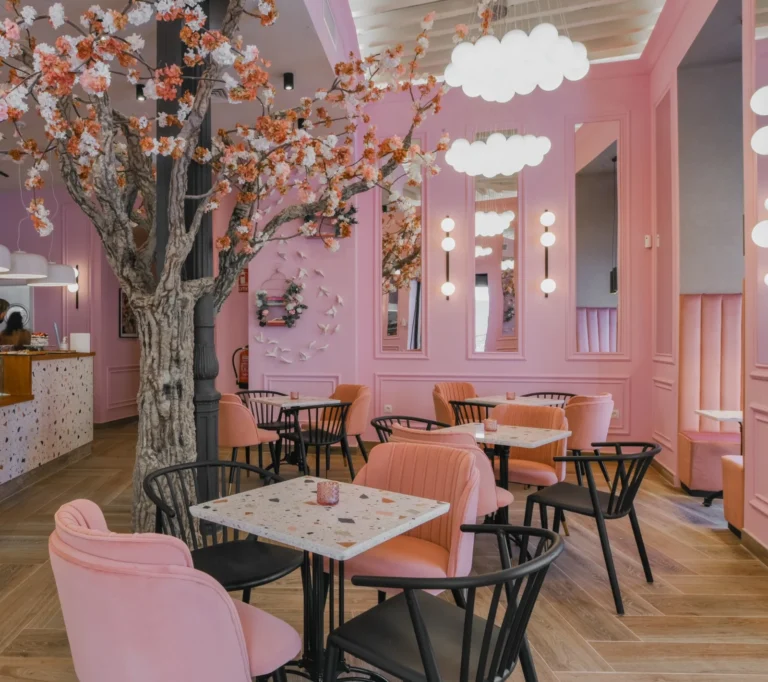
Delight in this feminine, whimsical space where pink walls and floral wallpaper create a garden-party atmosphere. A unique cafe interior design might embrace maximalism — pattern mixing, plate walls, vintage charm piled upon vintage charm. The effect feels like afternoon tea in a beloved grandmother’s sunroom, nostalgic and utterly charming.
Take risks in your cafe interior design if your brand calls for it. A pink-and-floral cafe won’t appeal to everyone, but it will become a destination for those who love it. Bold design creates loyal fans, while safe design creates indifference. Know your audience and serve them visually as well as culinarily.
20. Two Wooden Stools at the Window – Perfect for One
Claim your spot at this window-side counter with two simple wooden stools. A thoughtful cafe interior design includes seating for solo visitors — not every customer comes with a companion. The window counter lets singles feel part of the street scene while enjoying their own company, like a deer pausing at the edge of a meadow, present but apart.
Don’t neglect solo seating in your cafe interior design. Window counters, small two-tops, and bar-style seating along a wall give individual customers comfortable options. These spots are gold for remote workers, solo travelers, and anyone who values their own space. Design for the singleton as carefully as you design for the couple.
21. Wooden Tables and Chairs – Coffee Shop Standard
Appreciate the dependability of the classic coffee shop setup — wooden tables, simple chairs, nothing fancy. A workhorse cafe interior design prioritizes durability and ease of cleaning over trendiness. The furniture can handle daily abuse, the layout is easy for staff to navigate, and the atmosphere is reliably pleasant, like a well-worn trail that always leads somewhere good.
For a high-traffic cafe interior design, choose commercial-grade furniture rated for heavy use. Look for solid wood construction, reinforced joints, and finishes that resist stains. Test chairs for comfort before buying in bulk — uncomfortable customers leave quickly, which hurts both experience and revenue.
22. Empty Restaurant – Wooden Tables and Stools
Study the bones of this empty restaurant before the crowds arrive. A clean cafe interior design reveals itself when the room is empty — good proportions, natural light, clear sightlines. The wooden tables and stools wait patiently for their purpose, like a streambed before the spring melt, holding potential rather than activity.
Photograph your cafe interior design when it’s empty as well as full. The empty shots help you see spacing issues you might miss when people are in the seats. Adjust furniture placement based on these photos — a table that looks fine from the counter might block a path when viewed from across the room.
23. Living Room Filled – Next to the Plants
Nestle into this living-room-style corner surrounded by green companions. A residential cafe interior design blurs the line between home and hospitality — comfortable sofas, coffee table books, lamps that cast warm pools of light. The plants create a sense of being outdoors even when you’re inside, like a glass-walled sunroom in the middle of a garden.
Consider adding a “living room zone” to your cafe interior design if space allows. A sofa or two armchairs around a low table invites customers to stay for hours, ordering refill after refill. This works especially well in neighborhoods with many remote workers and students who need a “third place” between home and office.
24. Wooden Counter With Plants – The Greenery Bar
Order your coffee at this plant-topped wooden counter that doubles as a garden display. A inspired cafe interior design integrates greenery into every surface — including the bar where drinks are made. The plants soften the transaction of paying and waiting, making the counter feel like a garden gate rather than a sales barrier.
Place small potted plants on your service counter in your cafe interior design, but leave room for orders and pastries. Succulents work well here because they need little water and no daily maintenance. The visual of coffee and plants together reinforces your brand as natural, warm, and welcoming — a place that nourishes body and spirit.
🌱 The Roaster’s Almanac: 6 Essential Ingredients for Cafe Interior Design That Lingers Like Good Coffee
- ☕ Light in Layers, Not Just Overhead: A great cafe interior design uses pendant lights over tables, wall sconces for warmth, and floor lamps in corners. Never rely on harsh overhead fluorescents — they make customers feel examined rather than welcomed. Think of lighting as painting with illumination, each source adding a new color to the room’s glow like dawn gradually filling a canyon.
- 🪑 Mix Seating Types for Different Moods: Your cafe interior design should offer choices — bar stools for quick visits, soft armchairs for lingering, communal tables for groups, window counters for solo workers. Customers will self-select the spot that matches their mood, like animals finding their preferred microclimate in a varied landscape.
- 🌿 Make Plants Part of Your Staff: A living cafe interior design includes plants that clean air, absorb sound, and add life. Choose hardy varieties like pothos, snake plants, and ZZ plants that thrive on neglect. The greenery signals that your space is alive and growing, not sterile and corporate, like moss that proves a forest is healthy.
- 🎨 Let Walls Tell Local Stories: The best cafe interior design features local art, community photos, or a rotating gallery of customer work. Blank walls feel like unfinished conversations. Fill yours with images that spark connection — customers will return not just for coffee but to see what’s new, like checking on wildflowers after a rain.
- 🪵 Choose Wood That Wears Well: In busy cafe interior design, wood should be a feature, not a liability. Select solid oak, walnut, or maple that can be sanded and refinished. Avoid soft woods like pine that dent easily or veneers that can’t be repaired. Your furniture will age like a good cast iron pan — better with use, not worse.
- 🔊 Control Noise With Soft Surfaces: A loud cafe interior design drives customers away. Add acoustic panels disguised as art, hang fabric from ceilings, use upholstered seating, and install carpet or rugs over hard floors. The goal is a room where you can hear your conversation without shouting, like a forest clearing where sound travels clearly but softly among the trees.
Frequently Asked Questions
Q: What’s the most important element in cafe interior design?
Ans: Comfortable seating that invites lingering. The best cafe interior design prioritizes chairs and banquettes that support a long visit — because cafes profit from customers who stay and order refills. Test every seat yourself. If you wouldn’t want to sit there for two hours, neither will your customers. Think of seating as the soil in a garden: if it’s rich and supportive, everything else will grow beautifully.
Q: How do I make a small space feel larger in my cafe interior design?
Ans: Use mirrors to double visual space, keep the color palette light, and choose furniture with exposed legs. A smart cafe interior design for small spaces avoids bulky banquettes and oversized tables. Hang sheer curtains at windows to let light pour in. The goal is airiness, not emptiness — a space that feels like a meadow clearing rather than a closet, open and inviting despite its modest dimensions.
Q: What colors work best in cafe interior design?
Ans: Warm neutrals (cream, taupe, warm gray) with accent colors from nature (sage green, terracotta, navy blue). A successful cafe interior design avoids pure whites (too clinical) and primary colors (too juvenile). Your palette should feel like a sunset over hills — warm, layered, and slightly muted. Save bright colors for small accents that pop against your neutral base, like berries on a green bush.
Q: How many tables should I have in my cafe interior design?
Ans: Calculate using square footage and turnover goals. A rule of thumb for cafe interior design is 15-18 square feet per seat, including aisles and service areas. Count backwards — decide your target capacity, then divide by average seats per table. Fewer tables with better spacing beats cramming in extra seats. Customers pay for comfort, not just coffee. A spacious room feels luxurious; a cramped one feels cheap.
Q: How do I design a cafe interior that works for both quick coffee and long work sessions?
Ans: Create zones with different seating types. In your cafe interior design, place small tables and hard chairs near the door for grab-and-go customers. Put soft armchairs and booths in the back for laptop workers. Add electrical outlets at every seat, because the modern cafe interior design must power devices as reliably as it serves coffee. The room should adapt to the customer, not force customers to adapt to the room — like a forest that offers both sunny slopes and shady glens for different creatures.
Conclusion
You’ve wandered through twenty-five visions of cafe interior design — from plant-filled sanctuaries to bustling communal tables, from leather banquettes to window counters for solo dreamers. Each image held a different promise, but all shared the same heartbeat: a space designed for lingering. The best cafes aren’t just about the coffee; they’re about the feeling you carry with you after you leave — the warmth of the wood, the softness of the chair, the way the light fell across your table as you lost track of time.
Now it’s your turn to brew something beautiful. Sketch your floor plan, hunt for the perfect tables, and choose a green plant that will witness a thousand conversations. Your cafe interior design doesn’t need to be finished tomorrow — it needs to be started. The espresso machine is waiting, the chairs are eager for occupants, and somewhere out there, a future regular is hoping for a place just like the one you’re about to build. Pull up a chair, pour yourself something warm, and begin.