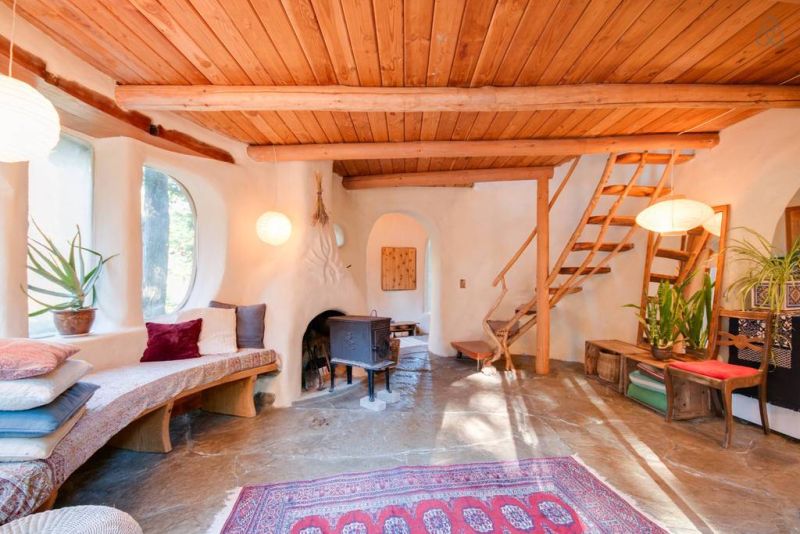
Step inside a cob house interior and you’ll immediately feel the difference — curved walls like wind-smoothed canyon stone, floors that hold the day’s warmth, and an atmosphere that wraps around you like a second skin. Cob, an ancient mixture of clay, sand, straw, and water, creates spaces that feel alive, organic, and deeply peaceful. You’ll love how a cob house interior blurs the line between shelter and sculpture, with every alcove and arch shaped by human hands rather than straight lines.
From kitchens overflowing with potted plants to bedrooms tucked into earthen alcoves, these cob house interior inspirations celebrate natural materials, soft lighting, and a rhythm that follows the seasons. Imagine bathing in an oval sink set into stone walls, swimming in an indoor pool nestled within the home’s heart, or curling up on a couch that faces a window framing nothing but sky. Let’s wander through these earth-hugging spaces — each one a reminder that the most beautiful homes grow from the ground up.
1. The Potted Kitchen – A Jungle Among Earthen Walls
Unfurl this kitchen where potted plants spill from every surface, their green leaves contrasting beautifully with warm earthen plaster. This cob house interior celebrates life in layers — the plants breathing humidity back into the clay walls. You’ll love how the kitchen feels like a living greenhouse, not a sterile workspace.
Plants are natural companions in any cob house interior. The organic walls and lush foliage share the same earthy palette, creating a seamless flow from architecture to botany. It’s like cooking inside a hidden grove.
2. Stone & Steps – Unusual Flooring and Winding Paths
Follow the steps of this unusual interior where stone floors lead you on a gentle journey through the home. This cob house interior uses natural stone as both flooring and sculpture, each flagstone unique like river rocks. You’ll appreciate how the texture changes underfoot — cool and solid, grounding every step.
Irregular stone flooring is a hallmark of authentic cob house interior design. It breaks the monotony of straight lines and invites bare feet to explore. The slight variations in height and color echo a forest floor, organic and forgiving.
3. Floating Couch – A Sofa Centered Beneath a Window
Notice the courage of placing a couch in the middle of the room, facing a window that frames the outdoors. This cob house interior layout invites you to look outward while being held inward. You’ll love how the earthen walls embrace the sofa from behind, creating a nest within the larger space.
Centered furniture works beautifully in cob house interior layouts because the curved walls naturally create zones. The couch becomes an island of rest, the window a painting that changes with the light — like a meadow viewed from a stone alcove.
4. Oval Basin – Sink Carved Into Stone Walls
Run your hands around an oval sink set directly into rough stone walls. This cob house interior bathroom feels like a natural spring — the sink a polished hollow in the rock. You’ll appreciate how the organic shape echoes the room’s earthen origins.
Bathrooms in a cob house interior are opportunities for sculptural moments. An oval sink, a rounded mirror, and a shower with pebbled flooring turn daily rituals into spa-like ceremonies. Water against stone, steam against clay — pure sensory poetry.
5. Whitewashed Warmth – Bright Walls with Potted Plants
Step into brightness where whitewashed cob walls reflect light while staying soft and matte. This cob house interior kitchen uses white lime wash to keep the space airy, with potted plants adding splashes of deep green. You’ll love how the contrast feels crisp yet natural.
Whitewashing is a classic finish for cob house interior walls. It protects the earthen plaster while brightening rooms that might otherwise feel too cave-like. The white isn’t stark — it’s the color of sun-bleached driftwood or pale desert sand.
6. Heart of Water – An Indoor Pool at the Center
Imagine swimming in the very center of your home, surrounded by earthen walls. This cob house interior feature turns a pool into a living heart — water reflecting firelight or skylight. You’ll be amazed at how the cob’s thermal mass keeps the pool area comfortable year-round.
An indoor pool within a cob house interior is the ultimate luxury. The earth walls absorb humidity and regulate temperature, while the water mirrors the organic curves above. It’s like bathing in a secret grotto, hidden from the outside world.
7. Vertical Garden – Plants Growing Right From the Walls
Watch life climb the walls of this living room where plants are integrated into the earthen plaster itself. This cob house interior blurs architecture and garden until they become one. You’ll love how the greenery softens every corner and purifies the air.
Living walls are a natural extension of cob house interior philosophy. The same clay that forms your walls can host pockets of soil for ferns, ivy, or succulents. The result is a home that breathes, changes, and grows — like a cliffside covered in moss.
8. The Solo Bed – A Bed Centered, One Window Watching
Rest in simplicity with a bed placed in the middle of the room, facing a single window. This cob house interior bedroom feels like a monk’s cell — serene, intentional, and utterly peaceful. You’ll appreciate how the earthen walls absorb sound, leaving only silence.
Minimalism finds a natural home in cob house interior design. A bed, a window, and curved clay walls are often enough. The room’s shape provides the decoration, with shadows and light playing across the textured plaster.
9. Woodland Gathering – Lots of Wooden Furniture in an Earthen Room
Settle into a living room filled with wooden furniture — tables, chairs, shelves — all resting within earthen walls. This cob house interior celebrates two natural materials: clay and timber. You’ll love how the wood’s grain echoes the plaster’s texture.
Wood and cob are ancient partners. In a cob house interior, wooden furniture feels less like decoration and more like an extension of the structure. Choose pieces with visible grain, joinery, and natural finishes to honor the earthiness.
10. Archway Dreams – White Walls, Wood Floor, Curved Passage
Walk through an arch into a bedroom with whitewashed cob walls and warm wood flooring. This cob house interior uses the arch as a threshold between sleeping and waking. You’ll admire how the curve softens the transition, like stepping from one meadow into another.
Arches are signatures of cob house interior design because cob naturally lends itself to curved openings. They feel ancient, welcoming, and structurally graceful — doorways that don’t just separate rooms but embrace each passage.
11. Round Table, Round Room – Circular Furniture in a Curved Space
Gather around a large round table in a living room where the walls themselves curve to meet you. This cob house interior celebrates the circle — no sharp corners, no straight lines. You’ll feel how the room encourages conversation and lingering.
Round furniture belongs in cob house interior spaces. Oval tables, circular rugs, and curved sofas echo the architecture, creating a harmonious flow. It’s like arranging stones in a streambed — everything finds its natural place.
12. Secret Sanctuary – An Untitled, Unforgettable Space
Discover a room without a name — a quiet nook within a cob house interior that defies easy labeling. Perhaps a reading corner, a meditation space, or simply a pause between busier rooms. You’ll love the mystery and the permission to just be.
Untitled spaces are gifts in any cob house interior. Cob homes often grow organically, creating unexpected alcoves and niches. Don’t feel pressured to assign a function to every square foot — some corners exist only to hold silence.
13. Collected Abundance – Lots of Furniture & Decor in Harmony
Embrace abundance in a living room where many pieces of furniture and decor coexist within earthen walls. This cob house interior proves that cob can handle maximalism — the organic walls soften the visual busyness. You’ll appreciate how the clay backdrop unifies varied objects.
Because cob house interior walls have such texture and warmth, they can support eclectic collections. Vintage finds, handmade pottery, woven textiles — all feel at home against the forgiving plaster. It’s like a forest floor collecting fallen treasures.
14. Clutter That Cuddles – More Furniture, More Warmth
Lean into layering with a living room filled with many pieces — sofas, armchairs, side tables, floor cushions. This cob house interior feels lived-in and loved, like a bear’s den lined with moss and memories. You’ll love how the curves of the walls embrace every object.
Don’t fear fullness in a cob house interior. The organic shapes and earthy tones can handle plenty of furniture without feeling chaotic. The key is keeping the palette grounded — wood, clay, linen, wool — and letting the forms vary.
15. Curved Bath – A Bathroom Held by a Wooden-Accented Curve
Soak in a bathroom where a curved cob wall meets warm wooden details — a bench, a shelf, a frame. This cob house interior space feels like a Finnish sauna crossed with an earthen hut. You’ll appreciate how the wood tempers the stone-like feel.
Wood accents inside a cob house interior bathroom add visual warmth and practical durability. Use reclaimed timber for shelving or a bath caddy. The combination of curved clay and straight wood grain is deeply satisfying, like a river meeting a forest.
16. Jungle Kitchen – Potted Plants Everywhere, Even Next to the Stove
Cook surrounded by greenery in a kitchen filled with potted plants on counters, windowsills, and hanging from beams. This cob house interior makes every meal feel like a picnic in a greenhouse. You’ll love how the plants thrive in the humidity from cooking.
Plants and cob are symbiotic. The clay walls help regulate moisture, which many houseplants love. In turn, the plants soften the kitchen’s hardworking surfaces. This cob house interior approach turns meal prep into a ritual among living things.
17. Next to Nothing – Or Next to Everything
Observe the flexibility of a living room that can be filled or sparse, always rooted by its earthen shell. This cob house interior adapts to your needs — a full gathering one day, an empty meditation space the next. You’ll admire how the walls anchor any arrangement.
The beauty of cob house interior is that the architecture itself provides so much character. Even with minimal furniture, the room feels complete. The curves, niches, and textures are the main event; furniture is just the guest.
18. Shelf & Stem – Wooden Shelves Laden with Plants Above the Counter
Reach up to wooden shelves holding potted plants just above a kitchen counter. This cob house interior detail puts greenery at eye level while keeping the workspace clear. You’ll love how the live plants soften the practical counter below.
Floating wooden shelves are perfect for cob house interior kitchens. They add warmth, provide display space for herbs or trailing plants, and break up the expanse of earthen wall. It’s a marriage of utility and poetry.
19. Illuminated Greenery – Plants and String Lights Together
Twine lights among leaves in a room where plants and soft illumination share the same corners. This cob house interior feels magical at night — the earthen walls glowing amber, the plants casting leaf-shadows. You’ll love how the combination whispers “fairy tale.”
Lighting is crucial in cob house interior design because the thick walls and small windows can make spaces dim. String lights woven through hanging plants solve this beautifully, creating dappled, warm illumination like sunlight through a forest canopy.
20. Again, and Again – The Joy of Abundance
Celebrate repetition — a living room filled with lots of furniture, again proving that cob house interior can handle crowds. You’ll notice how the earthen walls seem to absorb extra noise and visual input, keeping the space calm even when full.
Cob’s thermal mass also gives it acoustic benefits. A cob house interior absorbs sound rather than echoing it, making busy rooms feel more intimate. So go ahead, fill it with furniture and people — the walls will hold the peace.
21. Hearth & Curve – Large Circular Couch Around a Fireplace
Gather around warmth on a large circular couch that hugs a central fireplace. This cob house interior layout is ancient and intuitive — the hearth as the heart, the seating as a ring of stones. You’ll love how everyone faces each other, no hierarchy, just community.
A circular couch around a fireplace is peak cob house interior design. It honors the roundness of cob architecture and the primal pull of fire. Conversation flows, toes warm, and the earthen walls hold the stories.
22. Soak & Shower – Large Tub Beside a Walk-In Shower
🌾 Hand-Sculpted Haven Compass: 6 Earthy Blueprints for Cob House Interior
- 🪵 The Living Finish: Leave sections of your cob walls intentionally rough or add embedded stones, shells, or bottle caps. A cob house interior shines when you can see the hand of the maker — every thumbprint and trowel mark tells a story, like petroglyphs on canyon walls.
- 🍃 The Indoor Trellis: Install a wooden or twig trellis on one cob wall and train a climbing plant (jasmine, pothos, ivy). This cob house interior feature turns a wall into a living tapestry, the green softening the earth tones like moss on a boulder.
- 🪔 The Niche Light: Carve small alcoves into cob walls and place candles or oil lamps inside. These little glowing pockets turn a cob house interior into a constellation of warm light at night, like fireflies tucked into the plaster.
- 🪑 The Built-In Bench: Sculpt a bench directly from the cob — an earthen seat that never needs moving. Cover it with sheepskins or cushions. This cob house interior element feels ancient and intentional, like a ledge worn smooth by generations of resting travelers.
- 💧 The Indoor Water Feature: Add a small fountain or recirculating stream against one cob wall. The sound of water against earthen materials is deeply calming, and the humidity benefits the cob. This cob house interior addition turns your home into a grotto, a hidden spring.
- 🧵 The Textile Layer: Hang woven tapestries, wool blankets, or macramé on cob walls. Because the walls are soft and textured, textiles add warmth without feeling heavy. This cob house interior trick introduces pattern and color while protecting the plaster from wear.
Frequently Asked Questions
Q: Is a cob house interior difficult to maintain compared to conventional homes?
Ans: Cob requires some different care — mainly protecting exterior walls from constant driving rain and reapplying earthen plaster every decade or so. But inside a cob house interior, maintenance is simple: sweep earthen floors, touch up plaster cracks, and enjoy the natural humidity regulation. Think of it less as maintenance and more as a relationship with a living material, like tending a garden.
Q: Can I have modern appliances and plumbing in a cob house interior?
Ans: Absolutely. Many cob house interior designs incorporate modern kitchens, bathrooms, and even smart home technology. The key is planning — running pipes and wires through cob is possible but requires thoughtful layout. You can have a dishwasher, induction cooktop, and a flush toilet, all wrapped in beautiful earthen walls. Cob doesn’t mean roughing it; it means living beautifully within natural materials.
Q: How do I keep a cob house interior from feeling dark or cramped?
Ans: Use white or light-colored lime washes on interior walls to reflect light. Add skylights, solar tubes, or large south-facing windows. A cob house interior can feel incredibly bright and open with proper window placement. The thermal mass works with passive solar — warm in winter, cool in summer. Think of a well-designed cave with windows: protected, not prison-like.
Q: Are cob house interiors safe in earthquakes or humid climates?
Ans: Cob is actually quite seismic-resistant because it’s flexible and monolithic — it moves as a single unit rather than cracking like rigid masonry. In humid climates, proper foundations (stone or concrete) and large roof overhangs protect exterior walls. Inside, a cob house interior naturally regulates moisture, so it performs well in many climates. It’s an ancient, proven technology, not an experimental one.
Q: Can I build a cob house interior myself, or do I need professionals?
Ans: Cob is famously owner-builder friendly. Many cob house interior projects are built by small teams with workshops and guidance. However, foundations, roofs, and electrical/plumbing often benefit from professional input. The walls themselves — mixing clay, sand, straw, and stomping — can absolutely be a DIY labor of love. It’s like sculpting a house with your bare hands, and many people find that deeply fulfilling.
Conclusion
You’ve wandered through twenty-four intimate scenes of cob house interior life — kitchens blooming with plants, bathrooms carved like grottos, living rooms wrapped in curved clay. Each image whispers the same truth: homes made from earth feel like earth. They breathe, they hold warmth, they soften sound, and they remind us that shelter can be as organic as the soil beneath our feet. A cob house interior isn’t just a style; it’s a return to something ancient and deeply comforting — a hand-sculpted embrace.
Now it’s your turn to dream in curves and clay. Grab a notebook and sketch your ideal earthen nook — a window seat carved into a thick wall, a shelf of potted herbs above the sink, a bedroom shaped like a cave with a skylight for stars. Start small: a cob bench, a plastered niche, a single curved wall. Let your hands get dirty, let the materials guide you, and trust that a cob house interior will hold you like the earth holds a seed — warm, patient, and full of life. 🏺